
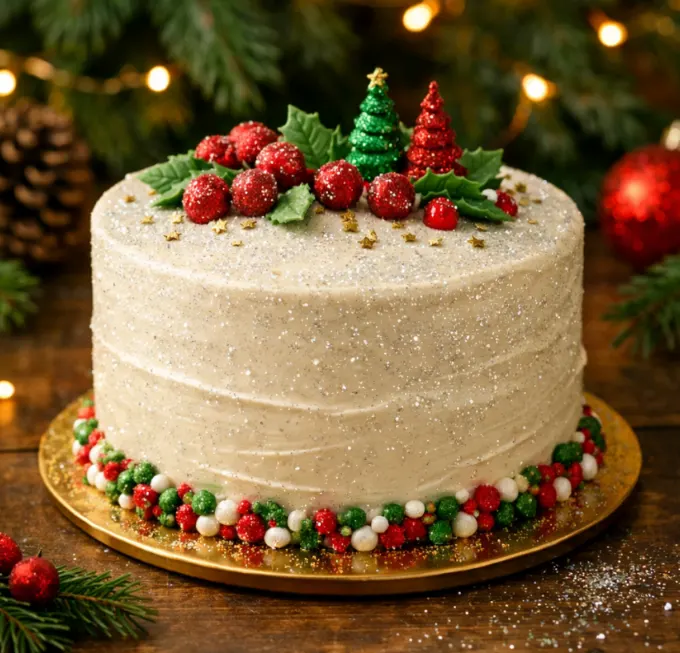
Christmas desserts get judged fast. Before anyone tastes the cake, they see it. If the finish looks dull, the whole bake can feel “off,” even when the crumb is perfect. Edible glitter for cakes is a simple way to add that holiday sparkle without changing your recipe, your bake time, or your frosting style. The trick is picking the right glitter effect for the surface you actually have, then applying it in a way that stays pretty through slicing, boxing, and a few hours on a warm table.
Why Edible Glitter Fits Christmas Cakes so Well
Holiday cakes live under bright lights, near heaters, and next to shiny ornaments. Anything decorative has to hold up in real conditions, not just in a perfect photo. Edible glitter works because it adds contrast and highlights with very little product and very little mess. Done right, it reads “festive” from across the room.
Sparkle Creates Instant Holiday Signals
Gold and silver highlights look like ornaments. White sparkle looks like snow. Red and green glitter accents can make a plain buttercream cake feel Christmas-ready in 30 seconds. That’s the appeal. It’s not magic, it’s just human eyes locking onto tiny bright points.
It Helps When You Do Not Want Extra Piping
Sometimes you do not want more rosettes, more fondant shapes, or another layer of icing. You just want the cake to look finished. A light glitter accent can replace a lot of fiddly work. And yes, that matters when you are tired and still washing the same mixing bowl again.
Choosing an Edible Glitter Type That Matches Your Cake Finish
Not all “glitter” behaves the same. Some finishes give you visible sparkle points. Others give you a smoother shimmer. If the goal is edible glitter for cakes, focus on how it reads on the surface, not how it looks in the jar. For a clear comparison between glitter-style sparkle and smooth luster finishes, see the difference between edible glitter and luster dust.
Sugar-Based Edible Glitter for Big, Visible Sparkle
If you want obvious sparkle, choose a sugar-based edible glitter style. It gives you tiny reflective points that show up even on dark frosting. This type works best as a top finish, not something you stir into buttercream. Think of it like adding “holiday light” to the surface.
Best uses:
- Edges of drip cakes
- Cupcake swirls
- Cookie-style toppers sitting on the cake
- Buttercream borders that need a little pop
Quick tip: press it lightly into tacky frosting. If the frosting has already crusted, a gentle mist of edible adhesive or a very light brush of edible glaze can help it stick.
Fine Glitter-Effect Dust for Softer Sparkle
If your design is more “elegant Christmas,” fine glitter-effect dust gives a quieter finish. It reads like a smooth twinkle rather than a chunky sparkle. It also works better for gradients and larger areas, like a full dome cake.
Best uses:
- White “snow glow” on a winter cake
- Metallic haze on chocolate ganache
- Soft sparkle over a stenciled pattern
Christmas Baking Ideas That Look Better With Edible Glitter
A lot of holiday desserts are already sweet and rich. Decoration should add contrast, not chaos. The ideas below are meant to look good in real life, even after transport.
Classic Layer Cakes With Holiday Highlights
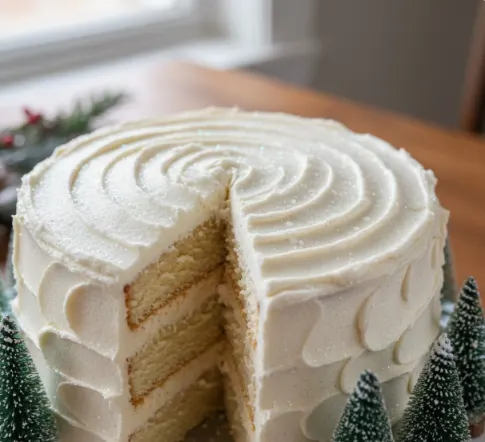
For a tall layer cake, glitter looks best when it has a job. Pick one job only: edge sparkle, top sparkle, or a single band.
Try these:
- A thin glitter band around the base border
- A glitter “halo” near the top rim, leaving the sides clean
- A top-only scatter around the center topper area
If the cake has a dark color, use lighter sparkle for contrast. If the cake is white, use gold or silver accents so it does not look flat.
Christmas Cupcakes And Mini Desserts
Cupcakes are where edible glitter for cakes pays off the fastest. One pinch per cupcake can change the whole tray. Keep it consistent across the batch so it looks intentional.
Easy looks:
- White sparkle on red frosting for a peppermint vibe
- Gold sparkle on chocolate swirls for a “holiday party” look
- Green sparkle only on the edge, not the whole top
Mini desserts also sell the “sparkle” idea well. Small surfaces catch light better, so less product does more.
Gingerbread-Style Cakes And Warm-Spice Bakes
Gingerbread cakes, spice loaves, and molasses bakes often look brown-on-brown. Glitter helps add contrast without turning the dessert into a neon sign.
Good pairings:
- Gold sparkle with warm brown tones
- White sparkle for a frosty “snow” theme
- A very small red accent sparkle on a few points, not everywhere
A small note that saves headaches: heavy steam from warm cakes can soften decorations. Let the cake cool fully before adding the final glitter finish.
How to Apply Edible Glitter Without Making a Mess
Application is where most problems happen. Too much glitter looks messy. Too little looks accidental. Aim for “you notice it, but you can still see the cake.”
The Three Easy Application Methods
- Pinch-and-sprinkle
Best for sugar-based sparkle. Hold your hand close to the cake so it drops where you want. - Spoon-and-tap
Better control. Tap a spoon gently to place glitter along borders. - Brush-on (for dust-like finishes)
Use a clean, dry brush for soft sparkle. Use a barely damp brush only if the product is meant for that style of use.
What Buyers Worry About: Safety, Stability, And Label Fit
If you buy for a bakery brand or a factory line, decoration is not just “pretty stuff.” It has to match ingredient rules, shelf targets, and customer expectations. Color and decorative powders also behave differently under light, heat, and pH. Some color systems fade faster under strong light, some shift under acid conditions, and some react more in the presence of metal ions. Those are the same real-world control points used across food color ingredients.
For procurement, ask for practical documents, not marketing lines:
- COA (so you can check heavy metals and basic specs)
- Technical data or usage guidance
- Storage advice and shelf life targets
In many food ingredient categories, sealed, dry storage is the standard. A lot of powdered food materials are kept in closed packaging, away from heat and moisture, with shelf life commonly around 12 to 24 months depending on formulation and packaging. That is boring, but boring is good when a holiday rush hits.
If you want to see the broader range of edible cake decoration options that can pair with glitter finishes, it helps to plan the full Christmas set as a system instead of random add-ons.
Small Mistakes That Ruin the Look
Glitter problems are usually simple, but they can still waste a whole batch.
- Applying to wet, melting whipped toppings: it sinks and clumps
- Throwing glitter on hot cakes: steam turns sparkle into sticky patches
- Using too many colors at once: it looks like a kids’ craft table
- Covering the whole cake: the design loses shape and contrast
A practical rule: pick one “sparkle zone.” Keep the rest clean.
A Practical Partner for Festive, Food-Safe Decoration
If holiday volume is part of your business, supplier consistency matters as much as the color itself. YAYANG supports festive dessert decoration with a range of edible decorative finishes designed for bakery and confectionery use. Product work in this category is not only about looks. It involves stability under light and heat, fit with different frosting surfaces, and documentation that helps your team buy with confidence, like COA and technical guidance. YAYANG also keeps the selection broad, so you can build a Christmas-ready set across glitters, shimmer finishes, and other decorative formats without juggling multiple sources. When you need a reliable food decoration supplier for seasonal runs, that “boring” consistency becomes the real competitive edge.
FAQ
Q1: How much edible glitter should go on a cake?
A: Start small. A light scatter on borders or the top center usually looks better than full coverage. If the sparkle disappears under your kitchen light, add another small pinch, not a handful.
Q2: Can edible glitter go on buttercream and ganache?
A: Yes. Buttercream holds sparkle well while it is still slightly tacky. Ganache works too, but wait until it sets a bit so the glitter does not sink.
Q3: Why does edible glitter sometimes clump?
A: Moisture is the usual reason. Steam from warm cakes, sweaty frosting, or humid kitchens can make glitter stick together. Cool the cake fully and keep the container sealed.
Q4: What colors look most “Christmas” without looking loud?
A: Gold, silver, and white sparkle are the safest. Red and green work best as accents, like a thin border or a small top scatter, not a full blanket.
Q5: Should edible glitter be mixed into frosting?
A: Usually no. Mixing can mute the sparkle and change texture. It looks cleaner when used as a finishing touch on the surface.