Introduction
We all see those amazing cakes on Instagram. They look like someone dipped them in real, melted gold. The light hits them, and they shine like a mirror. But when you try to do that at home or in your bakery, it often fails. Instead of a shiny finish, you might get a dull, yellow dusty look. What went wrong?
The secret to a truly shiny gold cake isn’t magic. It is just simple chemistry and skill. It comes down to how you put the powder on. Also, the quality of the stuff you buy matters a lot. This guide focuses on getting that perfect gold look. However, pro bakers also use a wide range of food-grade decorating powders to get different shiny and pearl-like effects.
In this guide, you will learn the big differences between wet and dry methods. We will also talk about safety mistakes to avoid and how to pick the right ingredients to make your cakes look great.
What is Edible Luster Dust?
First, let’s talk about what this stuff actually is. Edible Luster Dust is a fine powder. We use it to add color and sparkle to sweets. It is different from normal food coloring. Regular coloring stains the dough, but luster dust sits on top to reflect light.
The main ingredient is usually Mica. This is a natural mineral coated with food-safe colors. You might call it cake decor gold glitter dust or shimmering powder. No matter the name, picking the right product is key. If you don’t, your cake might feel sandy. High-quality dusts are ground down to be super fine. This lets them cover smoothly instead of feeling rough.
Technique 1: The Dry Dusting Method (Soft & Subtle)
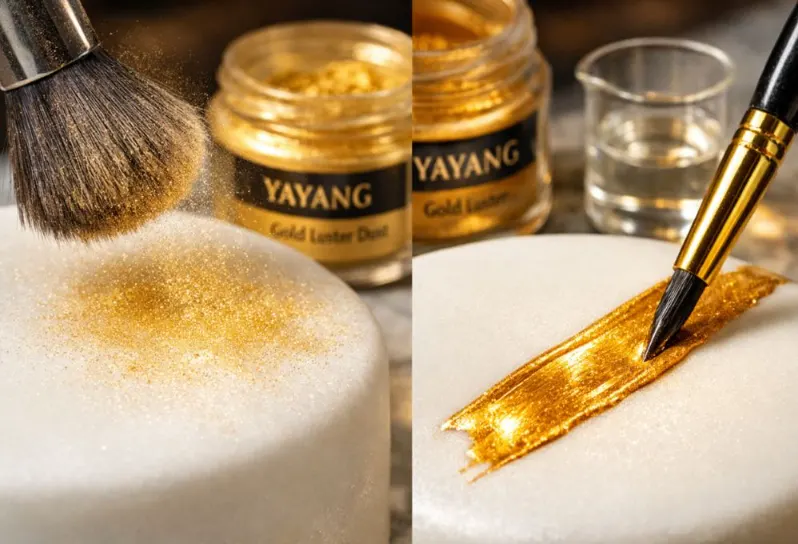
Dry dusting is the easiest way to start. You just take a soft, fluffy brush, and dip it in the dust. Then, gently brush it onto your fondant, gum paste, or chocolate.
When to use it:
Adding Dimension: This is great for sugar flowers. A dry brush lets you put color in the center of a petal. Then, you can fade it out toward the edges.
Pearl Effects: Do you want a soft, glowing look instead of bright metal? If yes, dry dusting is the right choice.
Subtle Highlights: You can dust the edges of ruffles or textures. This helps them stand out without looking too crazy.
Pro Tip: Make sure your brush is totally dry. If there is even a drop of water, the dust will clump up. That ruins the soft look.
Technique 2: The Wet Painting Method (High Shine Metallic)
Do you want a look that is solid and shiny, like a mirror? Then dry brushing won’t work. You need to turn your powder into paint. This is the big difference between Wet vs Dry Techniques.
To make this “liquid gold,” you have to mix the luster dust with a liquid. The liquid dries up after you paint it. This leaves behind a smooth, shiny layer of color.
Choosing the Right Solvent:
High-Proof Alcohol (Vodka/Everclear): Most pros use this. Alcohol dries very fast. This means the paint sets quickly and doesn’t melt the sugar on your fondant.
Lemon Extract: This is a good choice if you don’t have clear alcohol. It has a lot of alcohol in it but smells like lemon.
Oil: Only use oil if you are painting on chocolate. Water and alcohol can mess up chocolate and make it turn white or grainy.
The “Water” Warning: Never mix luster dust with water for painting fondant. Water dissolves sugar. It dries slow and leaves a sticky, ugly mess.
The Application: Mix a tiny bit of dust with a few drops of alcohol. Stir it until it looks like heavy cream or nail polish. Paint it on with a flat brush. Good dusts will cover well. You can cover dark fondant in just one or two coats.
Safety First: Edible vs. Non-Toxic
This part is super important. Please pay attention. There is a huge gap between “Edible” and “Non-Toxic.”
Edible: This means the product is food-grade. You can digest it safely. It meets food safety rules (FDA/EU).
Non-Toxic: This means the product won’t kill you if you eat a little bit. But it is not food. It is basically plastic glitter. You should only use it for decorations that you take off before eating.
Also, rules are changing. The EU has new rules about ingredients. To follow these rules but keep the shine, many bakers are switching to titanium dioxide-free gold luster dust. These products offer a safe finish that covers well. Real food-grade powders must also pass tests for heavy metals. This makes sure levels of Lead and Arsenic are very low so they are safe to eat. Always check the label. Ask your supplier for a COA (Certificate of Analysis).
Troubleshooting Common Mistakes
Even if you know How to use luster dust, things can go wrong. Here is how to fix them:
Streaky Finish: Your paint mix is probably too thin. You used too much alcohol. Add more dust to make it thicker.
Clumping: Your brush might be wet. Or, you are painting over a layer that is still wet. Let the first coat dry all the way before adding more.
Dull Color: You might be using cheap dust with too much filler. Pro dusts have more shiny pigment in them.
Conclusion
You might need the soft look of a dry dust. Or maybe you want the bright shine of wet metallic paint. Either way, mastering these skills lets you charge more for your cakes. But skill is only half the battle. The clarity, safety, and shine of your final cake depend on the stuff you buy.
If you are looking for the best gold luster dust for cakes, look for one that is E171-free produced by YAYANG is a pro choice. It uses natural ingredients to get a brilliant shine without the bad additives. It gives you that intense metallic look but meets modern safety rules.
YAYANG has been a specialized manufacturer of effect pigments since 1999. Based in Hangzhou, China, the company focuses on creating safe, high-quality color solutions for the food, beauty, and DIY industries. With over two decades of experience, the team provides more than just raw materials; they offer complete formulation support backed by a strong R&D department.
Operating from a GMP-compliant facility, it holds key international certifications including ISO22000, ISO9001, and KOSHER. This ensures every batch of their luster dust and natural extracts meets strict global safety standards. For brands seeking a reliable partner to navigate complex regulations like E171-free compliance, this manufacturer delivers the technical expertise and stable supply chain needed to succeed in competitive markets.
FAQ
Q1: Can I use water to create edible paint?
A: We don’t recommend it for fondant or gum paste. Water breaks down the sugar and dries too slowly. This often leaves a sticky, bumpy finish. Strong alcohol is better because it dries fast.
Q2: Will the cake taste like alcohol?
A: No. You use a very small amount, and most of it disappears into the air as the paint dries. Only the color stays behind.
Q3: Is the luster dust suitable for vegans?
A: Most mineral-based luster dusts (Mica) are vegan. However, you should always check the supplier’s documentation to make sure there is no carmine (made from bugs) or other animal-derived ingredients in it.
Q4: Can I use these powders in an airbrush?
A: Yes. You can mix the luster dust with alcohol to make it thinner, like milk. Then, use it in an airbrush machine to cover the whole cake smoothly.
Q5: What is the shelf life of edible luster dust?
A: These are made from minerals and have no water content, so they last a long time—often 5 years or more if kept dry and sealed.
For makers who need to be sure their metallic colors are safe and follow the rules, consult the technical team for formulation advice before you buy.