
Shelf-Life and Storage Protocols for Commercial Edible Beverage Glitter
Commercial edible beverage glitter adds a visible shimmer to cocktails, mocktails, sparkling wine, syrups, and ready-to-serve drinks. The product stays usable when you treat it like a food ingredient with a defined shelf-life, clean handling, and a written storage routine.
This guide gives you a practical beverage glitter storage protocol for a bar, beverage plant, bakery, or event kitchen.
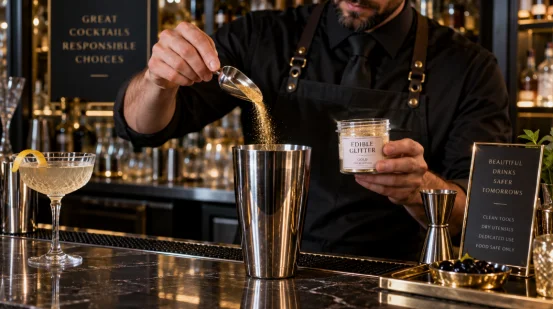
What Does the Shelf-Life Date Tell You?
The shelf-life date identifies the period when the sealed product should meet the supplier’s stated quality conditions. Check the lot code, packed date, best-before date, ingredient statement, and storage instruction on every case. A date applies to the original sealed pack. Once you open the container, record the opening date and set an internal review date based on your handling plan.
Edible glitter shelf life depends on the formula, packaging barrier, color system, and storage history. A dry powder can remain free-flowing while its color, aroma, or suspension behavior changes. Your receiving team should compare a new delivery with the approved sample and place any doubtful lot on hold for review.
Which Conditions Shorten Edible Glitter Shelf Life?
Heat, humidity, light, and repeated exposure to air affect powder performance. Moisture control for edible glitter starts with a dry storeroom, a closed primary container, and a scoop that is clean and fully dry. Keep the container away from steam wands, dishwashers, sinks, windows, and warm filling lines.
Temperature and Humidity
Use the supplier’s stated range first. When the label gives a general dry-storage instruction, keep the stock in a cool, stable room and avoid rapid temperature swings. Condensation can form when a cold container moves into a warm production area, so let sealed packs reach room temperature before opening. A small data logger helps you spot warm or damp periods in a storeroom.
Light and Air Exposure
Store containers in their original opaque case or a closed cabinet. Close the lid after each portion and keep the neck and threads free of powder. Air exposure can carry moisture into the pack and can transfer odors from spices, cleaners, or flavored powders.
Packaging and Seal Checks
Inspect the seal, liner, cap, pouch, and outer case at receiving. A broken seal, wet carton, pinhole, or swollen pack needs a hold decision. Do not combine remnants from two lots in one jar. Separate lots make batch traceability practical when a customer asks about a drink or a production run.
How Should You Store Commercial Edible Beverage Glitter?
Your edible glitter storage routine should fit the way your team receives, opens, measures, and serves the product. A simple written protocol reduces guesswork during busy service and gives quality staff a clear record.
Receiving and Stock Rotation
Record the supplier, lot number, date received, quantity, and condition of each case. Use first-expire, first-out rotation. Place newer stock behind the lot already in use, then check the date during weekly inventory. Keep a retained sample when your food-safety plan calls for one.
Opening and Portioning
Open the pack in a dry area away from active washing or steam. Use a dedicated, dry utensil. Portion the amount needed for a shift into a lidded service cup, and return the main pack to storage. A service cup should carry the lot code or a clear link to the lot record.
Cleaning and Contamination Control
Glitter contamination control covers people, tools, surfaces, and nearby ingredients. Wash and dry hands before handling. Keep the scoop with the product, and clean it according to your site procedure before reuse. A wet scoop can create clumps and introduce microorganisms. Discard product that contacts a worktop, floor, raw ingredient, or unapproved utensil.
Checking Opened Product
At each use, look for clumps, color shift, off-odor, package residue, or a change in how the powder disperses. A small clump can indicate moisture entry. Do not break it apart and return it to the main container. Place the pack on hold, note the observation, and ask the supplier for a disposition when the cause is unclear.
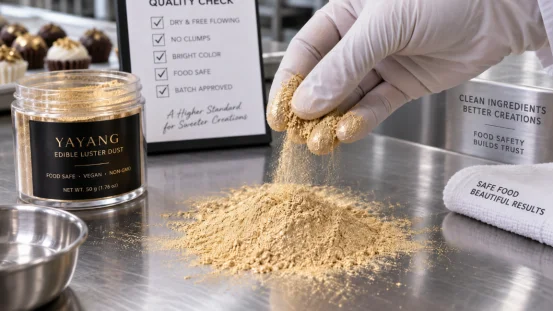
How Do You Use Edible Glitter in Beverage Service?
The drink application affects the practical service window. Follow the product label for use level and dispersion method, then run a small test in the actual beverage base. Acidity, alcohol, sugar, carbonation, temperature, and mixing energy can change the visible effect.
Batch Testing Before a Menu Launch
Test the glitter in the planned glass, bottle, or can. Record the dose, base recipe, mixing time, holding time, and appearance at service. Check the drink after five minutes, thirty minutes, and the longest planned hold. This record helps you set a beverage service shelf life that matches your menu workflow.
Safe Handling at the Bar or Line
Use a measured spoon or calibrated dosing tool. Keep the service cup covered between orders. Add glitter after the base drink reaches its serving condition, because a hot or wet tool can affect the powder. Train staff to identify the lot used for each shift through the prep sheet or batch record.
Documentation for Commercial Buyers
Keep the specification sheet, allergen statement, food-contact or food-use documentation, lot record, and complaint procedure with the ingredient file. Food-grade glitter should carry clear use instructions and ingredient information for your market. Your regulatory team can confirm local requirements for edible colorants and labeling.
How Can YAYANG Support a Controlled Glitter Program?
Storage records work best when the incoming material has clear product information. YAYANG’s edible luster dust range gives buyers a focused place to review food-use glitter options and request the documents needed for receiving and batch files.
For a commercial beverage program, ask for the lot format, recommended storage conditions, pack configuration, ingredient details, and sample approval process before the first purchase. These details connect the product to your moisture-control plan, service tests, and stock rotation record. The YAYANG website can serve as the starting point for a direct product and documentation inquiry.
FAQ
Q1: How long does commercial edible beverage glitter last?
A: Use the supplier’s printed shelf-life date for sealed stock. After opening, record the date, protect the powder from moisture, and follow your internal review period.
Q2: What is the best storage temperature for edible glitter?
A: Follow the label first. A cool, stable, dry storeroom with low temperature swings supports powder quality and limits condensation.
Q3: Can you use edible glitter after it forms clumps?
A: Hold the container and inspect the seal, odor, color, and storage record. Moisture-related clumps can affect performance and hygiene, so request a supplier decision before use.
Q4: How do you prevent glitter contamination at a busy bar?
A: Use a dedicated dry scoop, keep the service cup covered, label the lot, and discard powder that touches an unclean surface or wet tool.
Q5: Should opened glitter return to the original container?
A: Return it only when the portion stayed clean and dry and your site procedure allows it. Keep service portions separate when they have been exposed to the bar environment.