
What Should You Check Before Buying Bulk Natural Food Coloring?
Buying natural oil-based food coloring in bulk starts with the recipe and carton size. Write down the oil phase, target shade, dosage, annual volume, destination market, pack size, and delivery date. This gives each natural food color supplier the same brief.
You also need two separate descriptions. “Natural” identifies the source or regulatory category. “Oil-based” describes the carrier or dispersion system. A natural pigment in a water carrier can behave very differently from an oil-soluble natural food color in chocolate, compound coating, buttercream, or a fat filling.
Ask for the Exact Product Identity
Request the color source, color index or INS/E number where applicable, carrier, strength, recommended dosage, allergen statement, and market status. Check whether the quote covers a standardized extract, diluted preparation, or custom blend.
Check the Oil Phase in a Small Trial
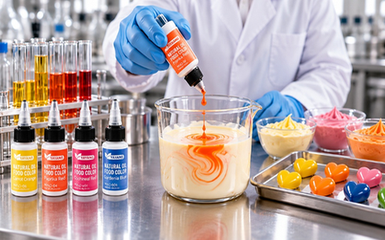
Blend the sample into the real fat, oil, cocoa butter, coating, or filling. Record mixing time, shade, speckles, sediment, flavor, and heat exposure. A small test can reveal a carrier mismatch before production.
Which Natural Color Families Suit Oil-Based Foods?
Your test should connect the color source, carrier, strength, and process temperature to the finished food. Keep the supplier’s technical sheet with the trial record.
Carotenoid Colors
A beta-carotene food color commonly supports yellow to orange shades. Ask about light and oxygen exposure, carrier oil, and heat history. Dosage can vary between clear oil, white chocolate, and dark coating.
Annatto and Bixin Colors
An annatto oil-soluble color can suit oil-rich applications when its carrier and fraction match the recipe. Ask how strength is measured and request stability data for your process.
Paprika and Turmeric Preparations
Paprika oleoresin color can provide orange-red tones. Request strength data, flavor impact, and light stability. For turmeric or curcumin, check curcuminoid content, heat and light stability, and use-level rules.
Custom Blends
For a custom shade, request the component list, shade tolerance, batch measurement method, and change-notification terms. Keep an approved swatch and retained sample for each lot.
Where Can You Buy Natural Oil-Based Food Coloring in Bulk?
You can source bulk natural food coloring from a specialist manufacturer, regional ingredient distributor, or importer with local stock. Compare options against your volume, trial needs, documents, delivery location, and the same quote fields.
Specialist Manufacturers
Ask about sample policy, batch size, quality records, concentration options, and technical support. This route suits projects that need a defined carrier, shade match, or trial in chocolate and fat systems.
Distributors and Stockists
Ask who owns and stores the inventory and whether the stock is released. Confirm lot number, remaining shelf life, storage temperature, customs responsibility, and freight.
How Does Food Coloring MOQ Affect Your Quote?
Food coloring MOQ can mean the minimum for one SKU, order value, or custom-blend batch. Ask which applies. Request sample, pilot, stocked, and made-to-order quantities.
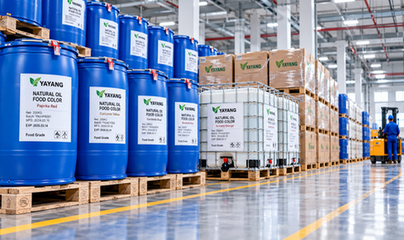
Record net weight per container, containers per carton, pallet dimensions, and storage temperature. Match pack size to your usage rate and shelf life.
How Should You Compare Food Color Pricing per Kg?
Compare food color pricing per kg against concentration, dosage, currency, freight, and Incoterm. Ask for price per kilogram or litre, quote validity, taxes, insurance, and payment terms. Note color strength beside each price.
Use this working calculation:
Usable color cost per finished tonne = price per kg × required dosage in kg per tonne
Add cleaning, storage, carrier handling, waste, and testing time. A concentrated color can cost more per kilogram and less at the dosage used in your recipe. Calculate cost for the same finished product.
What Does Food Ingredient Lead Time Include?
Ask the supplier to separate quote approval, sample preparation, order processing, production, quality release, dispatch, customs, and delivery. Confirm whether the clock starts at purchase order, deposit, artwork approval, or sample sign-off.
For stock, request available quantity, lot number, use-by date, release status, and dispatch window. For a custom blend, ask about raw materials, production slot, shade matching, release tests, and change control. Set a reorder point using usage, safety stock, and stated calendar or business days.
What Documents Should Arrive Before Payment?
Ask for a technical data sheet, lot-specific COA, ingredient and allergen statements, regulatory declaration, shelf-life and storage data, packaging details, and change-notification procedure. Request microbiology, heavy metals, residual solvents, GMO, irradiation, halal, kosher, vegan, or safety documents when your market requires them.
Match the lot code, net weight, tamper evidence, and transport temperature to your receiving record. For liquids, confirm temperature requirements; for powders, check moisture protection and mixing instructions.
How Should You Approve a Bulk Color Sample?
Test low, middle, and high doses beside an uncolored control. Measure shade, viscosity, set, gloss, flavor, and stored color in each fat system. Chocolate, buttercream, and compound coating can respond differently to one carrier.
Keep the approved sample, formula dose, lot number, and lighting conditions together. That record helps answer why a late-afternoon batch looks warmer.
Which Supplier Details Help You Place a Repeatable Bulk Order?
After a sample passes in your formula, connect the test result to the purchasing details. Share the application, target shade, oil phase, dosage, destination market, and forecast volume when you contact YAYANG. The food color collection and oil-based food coloring product offer starting points for reviewing the available range.
For this order, ask about a sample, carrier oil, recommended dosage, storage guidance, pack options, lot information, and market documents. Weigh the color into your actual formula and compare it with the approved shade record before confirming a bulk quantity.
FAQ
Q1: Where can you buy natural oil-based food coloring in bulk?
A: Compare specialist manufacturers, distributors, and regional stockists. Verify oil compatibility, product identity, food coloring MOQ, documents, and delivery terms at SKU level.
Q2: What is a normal food coloring MOQ?
A: MOQ varies by stocked SKU, pack size, concentration, custom blend, and production batch. Request sample, pilot, stocked, and made-to-order quantities in writing.
Q3: How do you compare food color pricing per kg?
A: Compare the same color strength, dosage, currency, pack basis, freight term, and Incoterm. Then calculate usable color cost in the finished food.
Q4: How long is the food ingredient lead time?
A: Separate stock dispatch from production, quality release, customs, and final delivery. Ask for calendar or business days and the event that starts the clock.
Q5: Is an annatto oil-soluble color suitable for every oil-based food?
A: Compatibility depends on the carrier, fraction, dosage, heat, light, and food matrix. Test the exact color in your formula and request stability and regulatory documents before approval.