
Wholesale edible ink markers require a simple daily habit. Close every cap after you use it. Read the storage rules on the box. Also, test each color on the food you want to decorate. If a line skips or looks faint, stop. Check the marker, the food surface, and the lot code before you change your drawing style.
A marker dries out when air hits the nib. A loose cap can also cause this problem. Storing the pen wrong or keeping it too long will ruin it. A quick test helps you find out if it is a user mistake or a bad batch. To learn more about buying, start by looking at the food product range.
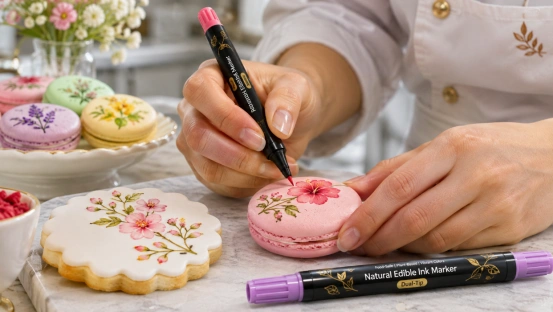
Why Do Edible Ink Marker Tips Dry Out?
The nib is a tiny, open part of the pen. Every time you leave the cap off, air touches the tip. Doing this a lot makes it hard for ink to flow out. A bad cap fit can also dry out the pen. The age of the marker and how the seller stored it matter too. Always read the rules for your exact marker.
Close the Cap Between Decorating Steps
Put the cap back on right after you finish drawing. Do this even if you just stop to move a tray. Make sure the cap clicks shut completely. Keep your other colors closed while you use one marker. When you are very busy, an open pen can just sit there. You might not even see it.
Follow the Product-Specific Storage Instructions
Look at the label for storage rules. Check the right room temperature and how to lay the pen. Read the shelf life too. A good storage habit keeps new boxes away from open markers. Make sure you can still read the lot numbers. Write down the day you open it if the maker asks you to. These steps help you fix ink problems later on.
What Causes Inconsistent Edible Marker Ink Flow?
Bad lines can come from the marker itself. The food surface or how you press the tip can also change the lines. A fine tip and a broad tip make very different marks. Because of this, compare each type with its own good sample. For a fair test, use the exact same color, food, and pressure every time. Draw the same length of line too.
Foods like fondant, dry royal icing, and cookies act differently. Macarons, chocolate plaques, and wafer paper also react to wet ink in their own ways. The rules say to test the marker on the real food first. Use a soft touch on weak shells. Too much liquid makes wafer paper curl up. Test it on a scrap piece. Wipe the nib if the rules tell you to do so.
Run a Short Surface Test
Draw three short lines on a scrap piece of your food. Look at the line width and the color darkness. See how fast it dries. If the first line is dark but the next ones are light, try again. Use a new marker from the same lot this time. Write down the color, tip shape, food type, and lot code.
Check Tip Pressure and Angle
Let the weight of the pen guide the fine tip on soft foods. Press gently and evenly on hard fondant or dry icing. If you push the tip too hard, it can drag. It might also leave a fat line. For a dual-tip marker, use the fine end for names. Use the broad end to fill in big spots.
How Can You Troubleshoot an Edible Marker That Skips?
Fix things step by step. First, make sure the cap was tight. Look at the nib. Try drawing on a dry food surface. Check the result against a good sample of the exact same color and tip. Write down the lot code before you call the seller.
Only follow the maker’s written steps to fix a dry pen. Treat the marker like a real food tool. Do not add water unless the seller tells you to in writing. A broken nib or leaky pen is a bad sign. If a few markers skip, you need to check their quality.
When you talk to the seller, tell them the color and tip type. Share the lot code and how you stored the pens. Tell them what food you used. Send a picture of the bad line. This helps the seller match your marker with their own test samples.
What Should Wholesale Buyers Check Before Ordering?
Wholesale buyers must start with a good sample. Get a written rule sheet for the product. Check how the pen works on the foods your buyers use. Then, match that test to the marker color, shape, and lot records you want to buy.
Ask the seller for the list of ingredients and allergens. Ask how to store it and how long it lasts. Check the tip shape, packaging, and lot codes. Test how tight the cap fits. When you test a sample, note if the line is smooth. Check the dry time and look for leaks. The rules explain how to use the fine tip and broad tip. Make sure the colors and shapes are right before you buy them.
Keep one good sample in a safe place. If a new box writes differently, test it again. Use the same food and pressure. Share your notes with the seller. Agree early on how to handle bad pens.
How Can You Set Up a Storage Routine for Wholesale Stock?
Keep new boxes away from open markers. Store each group exactly how the label says. Keep the lot numbers on the boxes. Use older stock first. Teach your workers to close caps right after using them. This habit gives you facts if a bakery complains about dry tips.
When a box arrives, check the lot code. Write down the day you open it. Keep markers out of bad weather. If many markers from one box act up, put them aside. Send the test details to the seller.
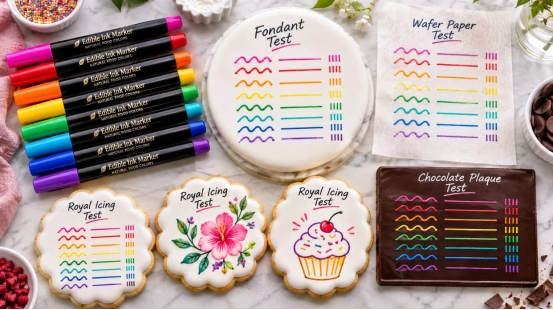
A Marker Format Buyers Can Test Across Decorating Tasks
If you worry about ink flow, test the pen on the exact foods your customers use. YAYANG Natural Edible Ink Marker sheets say to use the fine tip for letters. Use the broad tip to color big areas. These two uses give buyers a good way to test the ink. Try it on fondant, icing, cookies, macarons, and wafer paper.
You can look at the current YAYANG food product range today. Go to the YAYANG website to ask for product details or samples. Tell them your target colors and tip shapes. List the foods you use and your pack needs. Share your market spot too. This makes sure the sample matches your buying plan perfectly.
FAQ
Q1: How Do You Keep Edible Ink Markers from Drying Out?
A: Put the cap back on after you draw. Follow the storage rules on the box. Keep unused colors closed while you work. Write down the lot code and opening day if the seller says to.
Q2: Can You Revive a Dried Edible Marker Tip?
A: Only use the fix steps written by the maker. Ask the seller before you add water or any other liquid.
Q3: Why Does an Edible Marker Write Faintly on One Surface?
A: Food wetness, feel, and pen pressure can change the line. Try the pen on a dry scrap of the same food. Compare it with a good sample.
Q4: Should Edible Ink Markers Be Stored Horizontally or Vertically?
A: Do what the product label says. The way you lay it depends on the pen shape and ink type.
Q5: How Can a Wholesale Buyer Check Edible Marker Consistency Between Lots?
A: Keep one good sample. Test each new lot using the same color, food, and pressure. Note the line darkness, dry time, and lot code.