
You picked gold, not mustard. Yet the finished cake looks warm yellow, patchy, or flat. This is a common frustration with gold luster dust for cakes, even when the powder looked reflective in the jar.
A metallic gold cake depends on base color, reflective particles, coating density, surface texture, and light. The edible gold luster dust you choose matters because pearl and metallic finishes behave differently.
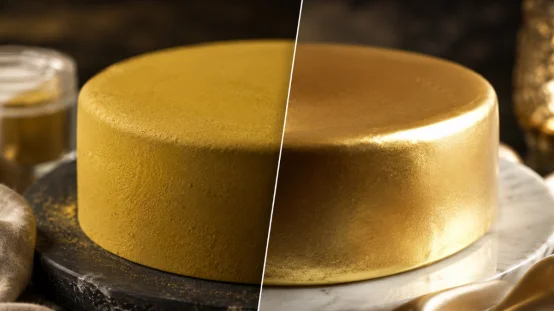
Why Does Gold Luster Dust Look Yellow Instead of Metallic?
If gold luster dust looks yellow, color is overpowering reflection. Metallic gold is not simply yellow pigment plus sparkle. Your eye reads metal when bright highlights sit beside darker reflected areas.
Metallic Gold Is More Than Yellow Pigment
A metallic gold finish needs enough reflective material to create a continuous sheen. Pearl luster dust gives a softer glow, while metallic luster dust aims for a denser reflective layer. That is why pearl luster dust vs gold luster dust matters when you want a polished result.
More yellow is not always better. Heavy yellow gold luster dust can shift toward ochre or mustard when shine is weak. In gold cake decorating, this is often why a gold cake looks yellow even though the shade seemed right.
Pearl White Can Add Metal-Like Light
Pearl white luster dust can soften yellow saturation while adding reflection. Used carefully, it can move strong yellow gold toward soft metallic gold or champagne gold, creating a more pearlescent finish without adding more yellow.
How Does Base Color Change Gold Luster Dust for Cakes?
Base color becomes part of the final shade because many luster coatings are not fully opaque. Before painting a tier, make a gold luster dust color test on scrap fondant with the same dust, liquid, and number of coats. Tiny test, big save.
White, Ivory, Yellow, and Dark Bases
Gold luster dust on white fondant can look clean, but one thin coat may appear pale or patchy. Ivory supports champagne gold luster dust and a soft metallic finish. A strong yellow base can intensify yellow gold luster dust and create that mustard look.
Brown or caramel adds depth. Gold luster dust on black fondant creates stronger contrast, while antique gold luster dust suits warm brown. For gold luster dust on buttercream, use a firm, chilled surface because texture and moisture break up shine.
The base color for gold luster dust should support the undertone you want. A practical gold luster dust troubleshooting guide also points to surface smoothness, paint strength, drying, and lighting as causes of dull results.
How Can You Make Gold Luster Dust Look More Metallic?
If you are asking how to make gold luster dust look more metallic, fix the application before adding extra yellow. Smooth surfaces, concentrated paint, thin layers, and controlled light usually matter more.
Dry Brushing vs Painting
Dry brushing gold luster dust gives softer shimmer and works well on raised details. Painting with gold luster dust gives stronger coverage. If you need to know how to apply gold luster dust or how to use gold luster dust, first decide whether you want soft shimmer or metallic gold paint for cakes.
For wet gold luster dust application, add a food-safe liquid gradually. Too much liquid spreads reflective particles apart; too little can make the brush drag. This guide to mixing luster dust explains why fast-drying food-safe media can give a cleaner metallic result than water on suitable surfaces.
Two or three thin coats are a practical working range. Let each coat dry first. Patchy gold luster dust often comes from uneven coverage, moisture, or repeated brushing after paint starts to set. Always confirm the product is edible or food grade. “Non-toxic” alone does not mean it belongs on food.
Light Changes What Your Camera Sees
Metal needs highlights and shadows. Flat overhead light can make metallic gold luster dust look ordinary. Warm light can strengthen yellow or copper notes. This is why a gold cake looks yellow in photos even when it looks richer in person.
If the gold luster dust looks orange, check both its warm undertone and the room light. If you are dealing with gold luster dust not metallic enough, move the cake near directional neutral light before repainting. Sometimes the coating is fine.
Which Gold Shade Fits the Cake Best?
Gold luster dust colors cover a family, not one single gold. When choosing gold luster dust shades, check the undertone and reflectivity first.
Champagne Gold, Rose Gold, and Antique Gold
Champagne gold luster dust is a strong choice when you want pale gold luster dust with less obvious yellow. A champagne gold cake works well with ivory, cream, wedding designs, and quiet luxury palettes.
Rose gold luster dust brings pink, blush, or copper warmth. Metallic rose gold needs enough reflection to stay metallic or it can drift toward peach. A rose gold cake feels softer than classic yellow gold, while rose gold cake decorating pairs naturally with blush or warm neutral bases. For champagne gold vs rose gold, choose champagne for softer neutrality and rose gold for more warmth.
Antique gold luster dust is deeper and more muted. It suits an antique gold cake, vintage gold cake details, sculpted surfaces, and dark palettes. For champagne gold vs antique gold, champagne looks lighter while antique gold gives more shadow. Dark gold luster dust also suits carved details where bright yellow feels too new.
The best gold luster dust for cakes is the shade whose undertone, pearl level, and application fit the base, surface, and final light. The same principle applies to high shine luster dust and metallic gold cake decorating.
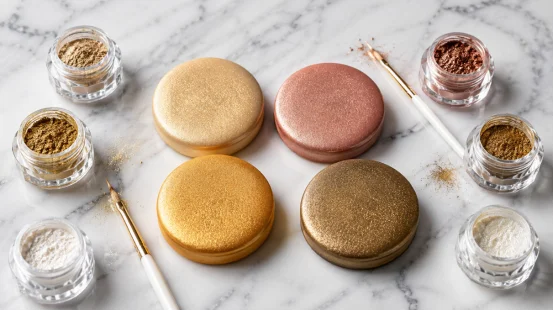
Choosing a Gold Supplier for More Repeatable Metallic Results
Once technique is controlled, repeatability becomes the next concern. For commercial decorating or repeat orders, color cards, particle consistency, food-use documentation, quality control, and custom shade support are practical buying criteria.
YAYANG states that it has produced effect pigments since 1999 and works with food-grade pearl pigments. Its site describes R&D, quality management, color-card production, packaging support, and OEM/ODM services. Its E171-free edible luster dust range is presented for cakes, cookies, chocolate, beverages, and other food decoration, with dry and wet application options.
Listed metallic and pearl shades include gold, silver, rose gold, copper, and iridescent white. Those capabilities matter when you need repeatable shade and reflective performance rather than simply “a gold powder.”
FAQ
Q1: Why does gold luster dust look yellow?
A: If your gold luster dust looks yellow, likely causes include a pale or overly warm base, thin coverage, weak reflection, or flat lighting. Check those factors before adding more color.
Q2: How do you make gold luster dust look metallic?
A: Start with a smooth, dry surface, use concentrated edible paint, build thin coats, and check the cake under directional light. This is also how to get a metallic gold finish on cake without making the color too heavy.
Q3: What color should go under gold luster dust?
A: White gives a brighter look, ivory supports champagne tones, caramel or brown adds depth, and black creates strong contrast. Test first because the same gold changes across bases.
Q4: Can you mix pearl luster dust with gold luster dust?
A: Yes, if both products are edible and compatible. You can mix pearl luster dust with gold luster dust to add reflection and soften a very yellow tone.
Q5: Does gold luster dust look different on fondant and buttercream?
A: Yes. Gold luster dust on fondant usually sits on a firmer, smoother surface. Gold luster dust on buttercream can show more texture and responds more to softness, moisture, and chilling.