
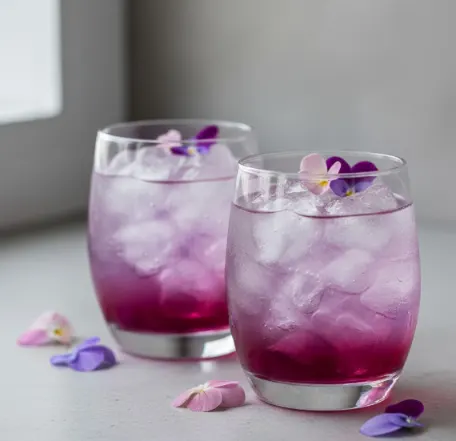
Anthocyanins sell themselves at first glance. You get reds, purples, and deep berry tones that look “natural” without trying too hard. Then production starts. A drink can look perfect in a lab beaker, then shift after pasteurization. One batch in a clear bottle fades on the shelf. That “purple” turns dull, and the customer calls it brown.That gap is the real story behind anthocyanins in food coloring: the color is stunning, but the boundaries are strict. If you treat anthocyanins like a plug-and-play dye, they will punish you.
Why Anthocyanins Look So Attractive in Food Applications
Anthocyanins are one of the first natural color systems many teams reach for. They come from familiar plant sources, the color range feels wide, and the market likes the idea of plant-based pigments. On paper, it looks like a safe bet. In real products, the same anthocyanin pigmentation that makes them visually appealing is also what makes them sensitive to pH, heat, light, and trace metals.
Natural Sources And Color Range
Anthocyanins show up in ingredients buyers already recognize: black goji, blueberry, mulberry, grape skin, black rice, purple sweet potato, even certain flowers. That variety is part of the appeal. You can cover bright reds in acidic systems, and you can reach purple tones that are hard to match with other natural options.
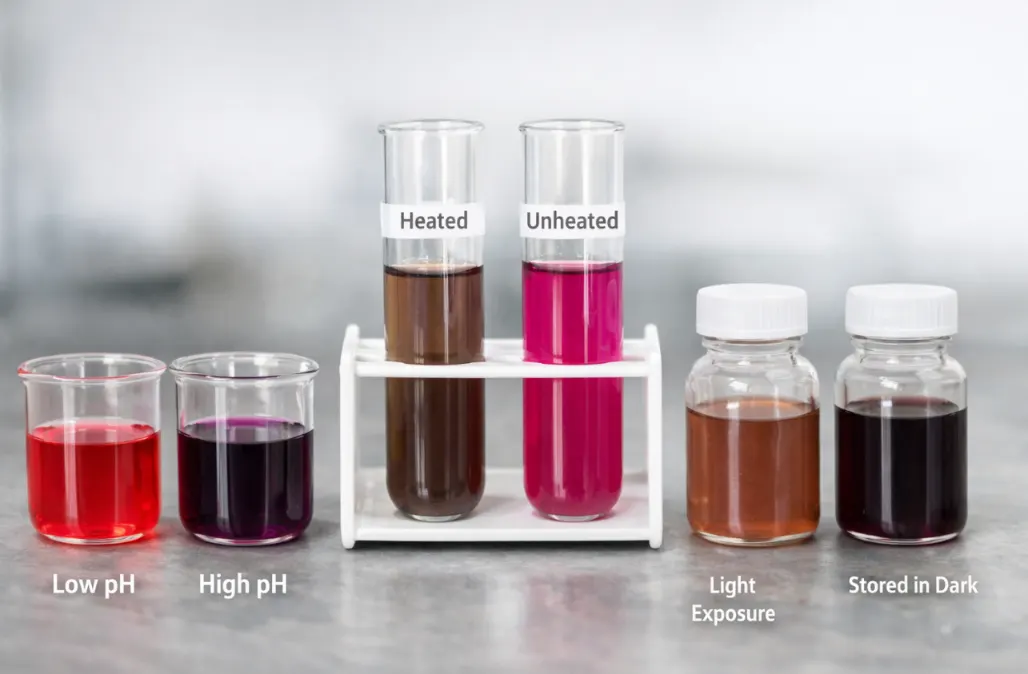
A key detail often missed in early discussions: anthocyanins can shift color with acidity. In simple terms, they tend to look redder in acidic conditions and move toward blue in more alkaline conditions. That sounds fun until you realize many formulations sit right in the “in-between zone” where tiny pH changes create visible shade differences.
Why Brands Prefer Anthocyanins
Brands like the story. Consumers accept the “from plants” idea fast. Product teams like the range. And compared with some natural colors that feel narrow or overly earthy, anthocyanins can look clean and modern.
The trap is that brand preference can pressure R&D to force anthocyanins into applications where they are simply not stable enough. That is when the good story turns into rework, discounting, or worst case, a reformulation.
The Hidden Limits Behind Anthocyanin Colors
Anthocyanins do not “randomly” fail. They fail in predictable ways. The problem is that those triggers show up everywhere in real food processing. Heat is not a single event. Light exposure is not a controlled lab lamp. Packaging is not always opaque. Even metal ions can sneak in through water, equipment, or other ingredients. If you want anthocyanins to behave, you have to design around these triggers from day one.
pH Sensitivity And Color Shifts
pH is the headline issue. If your beverage pH sits comfortably in an acidic range, anthocyanins can perform well and look vibrant. If your system drifts toward neutral, color becomes less predictable. Even small pH fluctuations can trigger visible shifts in anthocyanin pigmentation, which makes batch-to-batch consistency harder than most teams expect.
This shows up in “simple” products too. Fruit beverage may start acidic, then drift slightly after ingredient variation. Functional drink may include minerals or buffers that nudge pH. The label still says the same thing, but the color does not.
Heat Stability in Real Processing
Heat is not just “did you heat it.” It is how long, how hot, and in what matrix. Pasteurization, hot-fill, or any thermal step can reduce color intensity. The annoying part is timing: sometimes the color looks acceptable right after processing, then fades over days or weeks. That is why short tests can give false confidence.
If your anthocyanin sample looked fine in a quick bench trial, that result is not useless. It is just incomplete. The real test is heat plus time.
Light Exposure During Storage
Light stability becomes a business problem when packaging is transparent or semi-clear. Even if your warehouse is fine, retail lighting and long shelf time can do damage. Anthocyanin-based colors can fade or dull under exposure, especially when the product sits near the front of a display.
This is one of those issues that feels “minor” until it hits the first production run. Then it becomes very expensive very fast.
Metal Ions And Unexpected Reactions
Trace metals can shift color, dull it, or push it toward gray or brown tones. Iron and copper are common culprits. They can come from water, processing equipment, or other ingredients. You do not need a big contamination event. A small increase can be enough to change perception.
If you have ever seen a natural color look “dirty” rather than faded, metal ion effects are often in the mix.
Why Lab Results Often Fail in Production
Lab tests are controlled. Production is not. In a lab, you can hold pH steady, use clean water, minimize light, and test one variable at a time. In production, everything stacks: formulation complexity, thermal history, packaging choice, distribution temperature swings, and shelf time.
Controlled Tests vs Real Formulations
In real formulas, anthocyanins interact with sweeteners, acids, stabilizers, salts, and other actives. A clean demo solution is not a full product. If your team is choosing anthocyanins based only on a color chart or a single lab cup test, the odds of surprise later go up.
Packaging, Storage, And Distribution Effects
Packaging and distribution create slow pressure. Temperature changes during transport, storage time, and retail exposure can all shift color. Lab tests that stop at “day 3” often miss what happens at “week 6.” That is not because anyone did it wrong. It is because natural systems need longer observation to reveal their limits.
When Anthocyanins Work Well And When They Don’t
Anthocyanins can be a great solution when the application matches their nature. They can also be a headache when the application fights them.
Suitable Applications
They tend to perform better in:
- Acidic beverages and fruit-based drinks
- Cold-processed products
- Short shelf-life items
- Products with protective packaging (less light exposure)
High-Risk Applications
They often struggle in:
- Neutral or lightly buffered systems
- High-heat processing with long hold times
- Long shelf-life drinks in clear packaging
- Products where shade tolerance is extremely tight
What Food Manufacturers Should Check Before Choosing Anthocyanins
Before you commit, check the basics that actually decide success:
- Your real pH range across batches
- Your full thermal profile, not just peak temperature
- Packaging choice and light exposure reality
- Water quality and metal ion risk
- Shelf-life targets and acceptable shade variation
If you want a starting point for sourcing, keep selection tied to your process needs, not only the shade name. A practical entry is to review anthocyanin-based food color powders and then test under your real pH, heat, and packaging conditions.
Conclusion
Anthocyanins in food coloring are not “unstable” in a vague way. They are sensitive in specific, predictable ways. pH, heat, light, and metal ions are the main pressure points, and production makes those pressures harder to control than any lab setup. When you treat anthocyanins as a system that needs boundaries, they can deliver beautiful, market-friendly color. When you treat them as a universal natural dye, they will drift, fade, or dull at the worst possible moment.
YAYANG supports food manufacturers that want natural color powders that behave in real production, not just in a demo cup. With experience across multiple natural color systems (including anthocyanin-rich sources) and a practical focus on stability factors like heat, light, pH range, and metal ion sensitivity, you can get clearer guidance on what to test first and what risks to watch early. For projects where shade consistency and shelf performance matter, that “reality-first” approach saves time and reduces late-stage surprises, especially in beverages and other sensitive applications.
FAQ
Q1: Why do anthocyanins change color in drinks?
A: pH is the biggest driver. Small shifts can move anthocyanins from red to purple tones, and near-neutral systems can become unpredictable.
Q2: Are anthocyanins a good choice for clear bottled beverages?
A: They can work, but clear packaging increases light exposure risk. If long shelf life is required, you need longer stability tests under real lighting.
Q3: What usually causes anthocyanin colors to look dull or “dirty”?
A: Heat history and trace metals are common causes. Iron and copper, even at low levels, can push color toward gray or brown tones.
Q4: Why did the lab sample look fine but production failed?
A: Lab tests simplify variables. Production adds packaging, storage time, transport temperature swings, and full-formula interactions.
Q5: How do you reduce anthocyanin color problems early in development?
A: Start with real pH range, run heat and shelf tests longer than a few days, and check water and metal ion risks before scaling.