
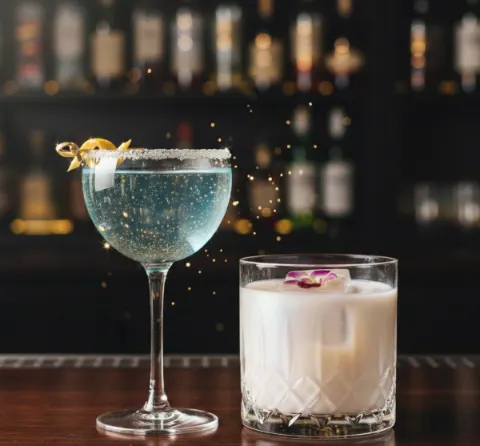
If you work on beverage launches, you already know the hard truth: a drink can taste great and still fail on the first photo. Shimmer helps, but the “sparkle” decision is not a styling choice. It is a behavior choice. Edible glitter vs edible luster dust comes down to particle size, how the drink moves, and how fast the visual drops out. This guide focuses on what actually works in real beverages, from cocktails and spirits to mocktails and limited-time promo drinks, with practical limits spelled out so you can avoid ugly settling, clumping, or that sad “all the magic at the bottom” look.
Edible Glitter And Edible Luster Dust: Same Goal, Different Behavior
Both ingredients aim to create visual lift, but they behave very differently in liquid. When you treat edible glitter like edible luster dust, you often get chunky sparkles that sink fast. When you treat luster dust like glitter, you may get a soft haze that looks weak in the wrong base. Your drink formula and your serving style decide the winner more than the label on the jar.
How Edible Glitter Behaves in Beverages
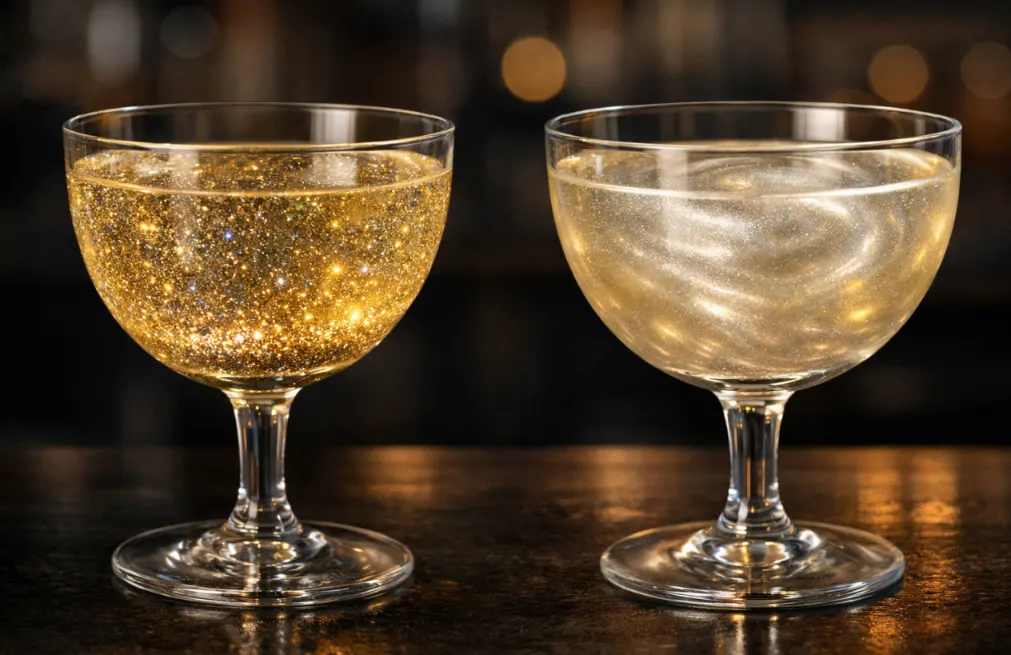
Edible glitter in beverages is usually about visible sparkle. The particles are larger, so the eye catches them easily, especially during motion: shaking, stirring, pouring, or swirling the glass. That is why glitter shines in party cocktails and “camera-first” bar menus.
The trade-off is gravity. Larger particles tend to settle faster, especially in low-viscosity drinks. If the drink sits on the bar for a few minutes, the sparkle often fades up top and builds at the bottom. That is not a defect. It is normal behavior. Many failures come from one expectation: long-term suspension in a drink that was never built for it.
How Edible Luster Dust Behaves in Beverages
Edible luster dust in beverages is more about light reflection than sparkle. The particles are finer, so you get a pearly glow, a soft shimmer, or a swirling “cloud” effect, depending on the drink base. In the right cocktail, luster dust can look premium and smooth, with less of a “craft glitter” vibe.
Finer does not mean permanent float. Luster dust can still settle, just differently. Some drinks show a slow drift that looks elegant. Others drop out quickly and turn muddy. That is why “luster dust edible” is a search phrase you may see from buyers who tried it once and got mixed results. The product is only half the story. The drink does the rest.
Edible Glitter vs Edible Luster Dust in Beverages: Practical Comparison
The simplest way to avoid confusion is to anchor your decision on a few traits you can test in one glass. The table below gives you a clean side-by-side view. After that, the rest of the article explains why those differences get bigger in real drinks, not smaller.
Table: Edible Glitter vs Edible Luster Dust in Beverages
| Aspect | Edible Glitter | Edible Luster Dust |
| Composition | Food-grade mineral or sugar-based particles designed to create visible sparkle | Fine food-grade pigments or mineral-based particles designed for light reflection |
| Particle Size | Larger particles, often visible as individual sparkles | Much finer particles that create a smooth, pearlescent or mist-like effect |
| Visual Effect | Strong sparkle and high visibility during movement | Subtle shimmer, soft reflection, and flowing visual depth |
| Sedimentation Speed | Faster settling, especially in low-viscosity or low-alcohol drinks | Slower visual settling in suitable liquids, but not designed for permanent suspension |
FDA And EU Food-Grade Standards: Why They Matter More in Drinks
In drinks, visuals are not the only risk. Liquids make it easier to overuse an effect ingredient, and they also make misuse more obvious. Any edible glitter or edible luster dust used in beverages should meet FDA food-grade requirements and EU food-grade standards, with clear ingredient listings, usage guidance, and basic documents like COA. YAYANG’s own drink content highlights food-grade and FDA-compliant expectations for beverage glitter use, which matches what professional buyers look for before testing.
A practical rule helps here: treat compliance as your entry ticket, not your marketing line. If you cannot verify food-grade documentation, the prettiest shimmer is still a problem waiting to happen.
What Determines Visual Success in Drinks
Even with the right ingredient, drinks are stubborn. Small shifts in alcohol, sugar, and serving timing can change your shimmer from “wow” to “why did it die.” If you want repeatable results, focus on the base first, then pick glitter or luster dust to match the base.
Alcohol Content And Its Impact
Alcohol content affects how particles disperse and how the drink looks in motion. Spirits and spirit-forward cocktails often show shimmer more clearly because the base is cleaner and less opaque. Mocktails can work too, but settling often looks faster and more obvious, especially in thin liquids. If your menu includes both cocktails and zero-proof options, plan to test each base separately. One success does not guarantee the next.
Sugar Level And Viscosity
Sugar and viscosity are the quiet drivers. Syrups, liqueurs, and sweet mixers can slow down visible settling, but they can also change how the shimmer reads. A thick drink may hold particles longer, yet the shimmer can look muted if the base is dark or cloudy. A thin drink can look brilliant for 30 seconds, then drop fast. The “five-minute test” is more honest than the first impression.
Serving Style And Timing
Your serving method can make or break the effect. Shaken drinks show sparkle during the pour, then calm down. Stirred drinks may keep a slow swirl longer. Ice matters too. Adding ice after shimmer changes motion and can make settling look uneven. If your concept relies on the camera moment, design for the first two minutes. If it needs to look good across a table conversation, design for ten.
Where Edible Glitter Works Better
Edible glitter works best when you want clear sparkles and you can rely on movement. That includes party cocktails, bar specials, and drinks made for immediate serving. Glitter also fits menus where “fun” is part of the brand voice.
If you need examples of how bars use glitter in real drinks, this post on edible glitter in cocktails gives practical ideas and common pairings.
Where Edible Luster Dust Is the Better Choice
Edible luster dust is the better pick when you want a refined shimmer without obvious particles. It suits premium cocktails, spirit-forward serves, and drinks where the look should feel smooth and “built-in,” not sprinkled on.
Common Failures And How to Avoid Them
Most beverage shimmer failures come from a mismatch between expectation and physics.
- Expecting long-term suspension:Neither glitter nor luster dust is designed to “float forever” in every drink. Decide how long the effect must last, then test for that window.
- Using the wrong base:Dark, opaque, or heavily pulpy drinks hide shimmer and make settling look messy.
- Skipping real-glass testing:Do a one-glass test, then repeat it with your real garnish, real ice, and real serve time. The garnish can change motion. Ice dilution changes everything.
- Ignoring compliance paperwork:If a material is not clearly food-grade for your market, do not test it “just to see.” Drinks create a faster route from experiment to customer complaint.
Choosing Between Edible Glitter And Edible Luster Dust for Your Drink
If your drink concept needs sparkle that pops on camera, choose edible glitter and design the serve around motion. If your concept needs a smooth, premium glow, choose edible luster dust and match it to a base that shows soft reflection. If you sell across regions, treat FDA/EU food-grade documentation as a starting filter before you compare visuals.
For teams building multiple drink concepts, it helps to standardize your test method and keep one baseline source for materials. The food-grade luster dust options category is a clean place to begin selection before you narrow to specific colors or effects.
Where YAYANG Fits in Beverage Visual Projects
When you are trying to make shimmer repeatable, supplier support matters almost as much as the powder. YAYANG’s product range covers edible luster dust and edible glitter intended for food and drink decoration, with an emphasis on food-grade materials and clear usage direction. Their beverage-focused content shows practical, bar-style use cases (champagne, mojitos, margaritas), which is useful when your team needs quick test ideas before a larger trial.
If you are building cocktail visuals for launch photos, limited-time menus, or premium spirits, you can treat YAYANG as a source for effect pigments plus a starting library of application ideas. The goal is simple: pick the effect that matches your drink base, confirm documentation early, then run the same test method across your menu so results stay consistent.
FAQ
Q1: Can edible glitter stay suspended in drinks?
A: Usually not for long. It looks best during stirring, shaking, and pouring. If the drink sits, settling is normal, so design your serve around movement.
Q2: Does edible luster dust work better than glitter in cocktails?
A: It depends on the look you want. Luster dust gives a smoother shimmer. Glitter gives sharper sparkles. Your base color and viscosity decide which reads better.
Q3: Why does shimmer look great in one drink and flat in another?
A: Alcohol content, sugar level, and opacity change how light moves through the drink. A clear, spirit-forward base often shows shimmer better than a cloudy mix.
Q4: Can you use edible glitter or luster dust in bottled beverages?
A: In most cases, these effects fit freshly prepared drinks more than shelf-stable bottles. Bottled products need tighter control over settling, storage, and consistency.
Q5: Why should you care about FDA and EU food-grade standards for drink effects?
A: Drinks make misuse easier and more visible. Food-grade documentation and clear usage guidance reduce risk before you run any trials at scale.