What Is the Fastest Way to Choose?
When people search for edible glitter vs luster dust, they usually do not want a chemistry lesson. They want to know what to buy before a cake order, cookie set, chocolate box, or cocktail night goes sideways. Fair. These products all sparkle, but they do very different jobs.
Choose Edible Luster Dust for Soft Shine
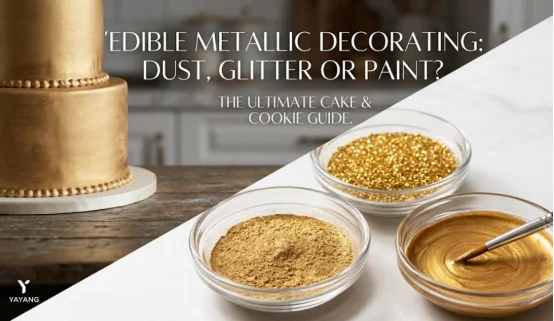
Edible luster dust is a fine powder. It gives pearl, shimmer, or metallic sheen without adding texture. Use it when you want a smooth gold edge on fondant, a pearly blush on gum paste flowers, or a gentle shine on chocolate.
Choose Edible Glitter for Visible Sparkle
Edible glitter is better when you want the sparkle to be seen from a distance. Think cupcakes, cookies, drinks, party desserts, and anything that should look fun right away. It is less subtle. That is the point.
Choose Metallic Food Paint for Clean Coverage
Metallic food paint works best when you need color control. It can cover lines, panels, lettering, borders, and larger shapes more evenly than dry powder. For full gold lettering on cookies, it often saves time.
Which One Should You Use for Cakes?
Cakes are tricky because one cake can have buttercream, fondant, chocolate drip, and sugar flowers all in one design. The right choice depends on the surface, not just the cake.
Fondant Cakes
Use edible luster dust dry for soft shimmer. Mix it with a clear liquid to make paint for sharper gold or silver accents. YAYANG’s E171-Free Edible Luster Dust is made for cakes, cookies, cupcakes, chocolates, and beverages, and it can be used on wet or dry surfaces.
Buttercream Cakes
Use shimmer food coloring or a light dusting only after the buttercream has crusted or chilled. Very soft buttercream grabs too much product. It can look patchy, which is painful after smoothing a cake for half an hour.
Full-Surface Metallic Effect
For a whole tier, metallic food paint gives steadier coverage than loose glitter. Work in thin coats. Let each coat dry before adding the next. One heavy coat usually looks streaky.
Which One Works Best for Cookies?
Cookies need clean lines and repeatable results, especially when you are making 40 wedding favors at midnight. Nobody wants to gamble at that hour.
Royal Icing Cookies
For dried royal icing, metallic food paint or an edible metallic pen works best. Use luster dust for a soft background shimmer. Use edible glitter only when the design needs texture, like stars, snow, party dots, or a bold rim.
Sugar Cookies With Fine Details
For names, dates, small leaves, or thin borders, choose an edible metallic pen. YAYANG’s food decorating range includes edible metallic pens and brush pens, which are useful when a brush feels too messy for small writing.
Which One Should You Use on Fondant?
Fondant is the friendliest surface for metallic decorating. It is smooth, firm, and usually dry enough to hold pigment well.
Luster Dust for Fondant
Luster dust gives fondant a soft luxury finish. Dry brush it over flowers, bows, plaques, or molded trim. For stronger color, mix it into a paint-like texture and use a fine brush.
Metallic Food Paint for Fondant
Choose metallic food paint when the design needs solid gold, rose gold, copper, or silver coverage. It suits monograms, borders, geometric panels, and cake toppers. Let the fondant dry first. Sticky fondant pulls under the brush.
Which One Should You Use on Chocolate?
Chocolate looks great with metallic finishes, but it is less forgiving than fondant. The surface must be dry and at room temperature.
Luster Dust for Chocolate
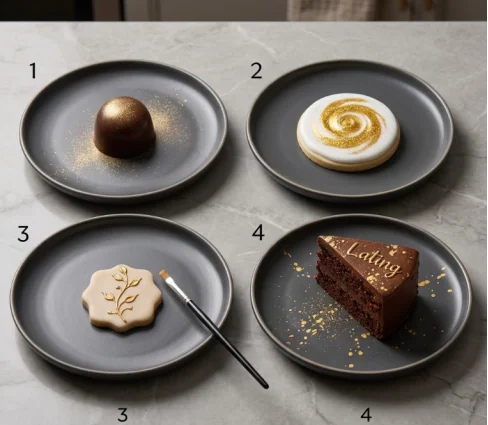
Dry dust works well on molded chocolate, truffles, bonbons, and chocolate decorations. It catches light without covering the chocolate color fully. For darker chocolate, gold and copper shades usually show better than pale pearl.
Metallic Paint for Chocolate
Use metallic food paint for stripes, splatter, and painted panels. Do not paint cold chocolate straight from the fridge. Condensation makes the paint skip and smear. Give it a few minutes. Boring advice, but it saves the finish.
Which One Should You Use for Drinks?
Drinks are a separate case. Texture matters less, but movement matters more.
Edible Glitter for Cocktails and Mocktails
Edible glitter gives that swirling, snow-globe look in clear drinks, cocktails, mocktails, and party beverages. YAYANG describes its edible luster dust and glitter powder as usable in drinks and cocktails, with tasteless formulas that do not change the original flavor.
Shimmer Food Coloring for Smooth Glow
Use shimmer food coloring when you want a more blended glow instead of visible sparkle bits. It fits drinks, dessert sauces, and themed beverage menus.
Which One Is Best for Fine Details?
Fine details need control. That means pens, thin paint, or a very small dry brush.
Edible Metallic Pen
An edible metallic pen is the easiest pick for writing, dots, thin lines, cookie names, fondant plaques, and chocolate accents. It is cleaner than loose dust and faster than mixing paint for every tiny mark.
Thin Metallic Paint
Apply thin metallic food paint for fine details. These include vines, lace edges, and flower centers. Always use small brushes. Larger tools often cause unwanted streaks.
Buying Safe Shine Simply
Once you pick a finish, read the tag. “Edible” confirms it is safe to eat. Real details like food-grade marks, allergen alerts, clear ingredients, and safety rules easily outweigh a nice bottle.
YAYANG perfectly meets these needs. Their website offers diverse food decorating products. The lineup features edible luster dust, E171-free luster dust, shimmer food coloring, oil-based coloring, gels, and edible pens. They operate as an expert effect pigment manufacturer. They possess years of background making pearl pigments, glitter powder, and metallic powders.
Furthermore, they highlight custom color matching and packaging help. They perform strict quality checks, from raw materials to final samples. They follow ISO9001, SGS testing, and strict regulatory compliance. Bulk buyers often compare edible glitter vs luster dust. YAYANG’s wide selection proves highly useful here. After all, treats and drinks usually require multiple finishes. A mixed line simply makes sense.
FAQ
Q1: Is edible glitter vs luster dust mainly about texture?
A: Yes. Luster dust is fine and smooth. Edible glitter gives larger visible sparkle. Pick dust for sheen and glitter for party-style shine.
Q2: Can luster dust become metallic food paint?
A: Yes. Blend edible luster dust with any clear liquid. Next, brush this mix onto fondant, cookies, chocolate, or sweet decorations.
Q3: What should you use for a full-surface metallic effect?
A: Metallic food paint typically provides smoother coverage than dry dust or glitter. Apply very thin coats. Allow each layer to dry completely.
Q4: What is best for fine writing on cookies?
A: An edible metallic pen is the easiest option. It gives cleaner lines and less mess than loose powder.
Q5: Should you choose E171-free luster dust?
A: If your market asks for titanium dioxide-free products, E171-free luster dust is the safer buying direction. Always check the label and compliance details.