
Oil-Based Food Coloring vs Water-Based Gel: Which Works for Chocolate?
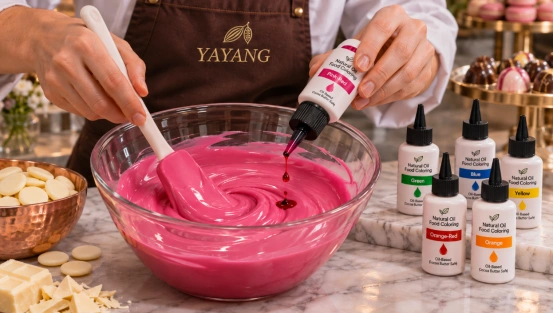
Oil-based food coloring for chocolate is the best starting point for bars, molded candies, cocoa butter, and sweet coatings. The color carrier must match the fat in the candy. A water-based gel can add too much water to melted chocolate. This extra water might make the warm mix get very thick or seize up tight. […]
Wholesale Edible Ink Markers: How to Prevent Dry Tips and Inconsistent Ink Flow
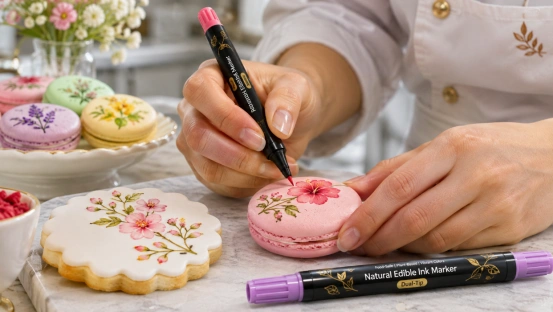
Wholesale edible ink markers require a simple daily habit. Close every cap after you use it. Read the storage rules on the box. Also, test each color on the food you want to decorate. If a line skips or looks faint, stop. Check the marker, the food surface, and the lot code before you change your […]
Acidity and Alcohol Stability: Formulating Shimmer Wines Without Altering Flavor Profiles
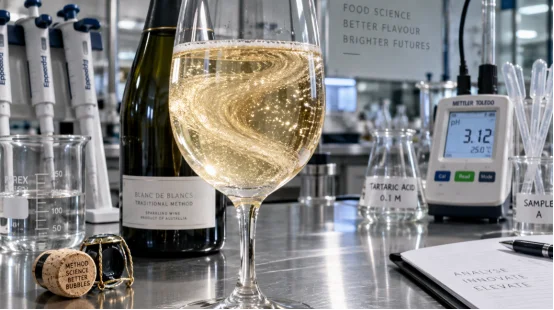
When you formulate a shimmering wine, the powder joins a complex liquid system. Acidity, alcohol, sugar, carbon dioxide, temperature, and mixing all affect particle movement and aroma release. A stable formula keeps the visual effect repeatable while preserving the wine’s intended taste. Why Do Acidity and Alcohol Stability Matter in Shimmer Wine Formulation? Acidity and […]
Scaling Up: Dosing Strategies for Injecting Luster Dust into Automated Beverage Bottling Lines

A pilot tank can produce a beautiful shimmer with a measured scoop and a patient operator. At 120 bottles per minute, that same habit creates pale bottles, glitter-heavy bottles, blocked feed points, and messy batch records. Dosing strategies for injecting luster dust must turn a dry, moisture-sensitive powder into a controlled addition that stays repeatable from […]
Private Label Natural Edible Ink Markers: How to Launch Your Own Brand
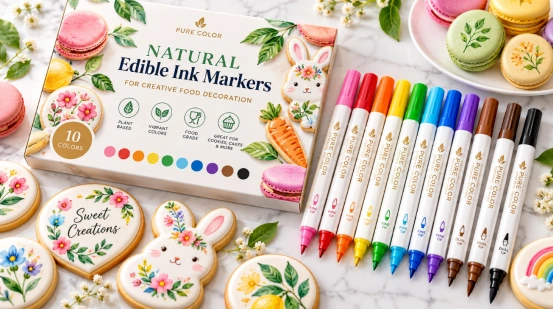
Introduction Launching private label edible ink markers starts with a product file. Add the logo after you define colors, tips, formula, pack size, market, and testing. Natural edible ink markers need a precise natural-claim definition. Ask for color sources, carriers, preservatives when used, allergens, shelf life, and storage before printing. Use a simple route. Define the […]
Natural Red, Green, and Blue Oil-Based Food Coloring: How to Choose Colors That Stay Consistent
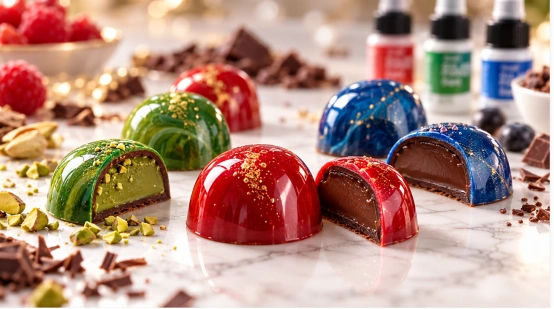
Natural colors frequently shift. This happens during heating, cooling, setting, or storing. Red might seem warmer. Green can turn olive. Meanwhile, blue sometimes looks gray inside an ivory fat base. Selecting natural red, green, and blue oil-based food coloring demands a strict method. You must evaluate the pigment source, carrier, dose, recipe, and storage setup. These […]