
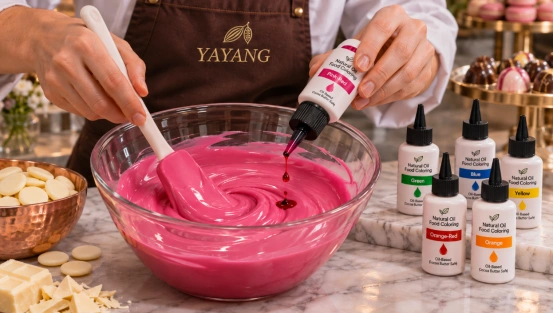
Oil-based food coloring for chocolate is the best starting point for bars, molded candies, cocoa butter, and sweet coatings. The color carrier must match the fat in the candy. A water-based gel can add too much water to melted chocolate. This extra water might make the warm mix get very thick or seize up tight. Always check the label to see how to use the product. Try the color in your full recipe before you make a big batch.
The phrase oil-based food coloring vs water-based gel talks about what carries the color. Oil-based tells you the carrier type. Natural just describes where the color comes from. A natural color can still use different carriers. Because of this, read the ingredient list carefully. Look at the rules for that specific color. You can look through the food color range to pick the right items for your chocolate test.
Which Coloring Works for Chocolate?
For shaped chocolate and cocoa butter treats, pick a color made to mix with fat. Oil-soluble colors melt right into the oil part. Oil-dispersible colors spread through the fat like tiny dots. The seller needs to tell you which type they have. They should also tell you how much to use.
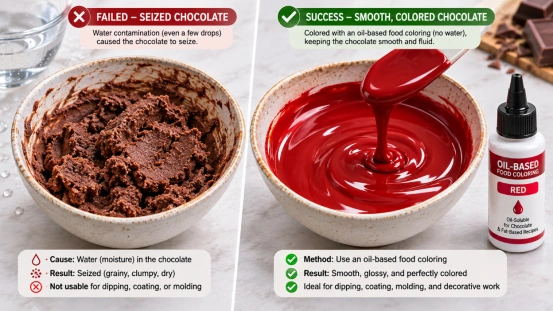
Water-based gel food coloring for chocolate needs careful thought. A lot of gels hold water or something like it. Chocolate is mostly made of sugar and cocoa bits swimming in fat. If you add water, those dry bits stick together and form lumps. For a soft ganache or a recipe that already has water in it, pick a color made just for that wet mix.
How Oil-Based Colors Behave in Chocolate
An oil-based color has a carrier made for fat mixes. How the color looks and flows depends on a few things. It changes based on the amount you add, the carrier type, the base chocolate, and how well you stir it. White chocolate naturally has a slight yellow or ivory tint. This tint can make cool colors like blue look a bit warmer. Always write down how the color looks when it is melted. Then, note how it looks after it gets hard.
When a Water-Based Gel Has a Place
Only use a water-based gel in recipes that already hold water. Icing or cream fillings work great for this. But for a hard chocolate bar or plain cocoa butter, stop and check first. Only use it if the seller promises it works for that exact food and process. Make sure to read every word on the ingredient list. The word gel alone does not tell you if it has water or oil inside.
Why Can Water Cause Chocolate to Seize?
Chocolate keeps its sugar and cocoa bits floating evenly in fat. Even a tiny drop of water changes things. It wets those dry bits and pulls them into hard lumps. This makes the chocolate very thick. It becomes hard to pour or shape. That is why chocolate seizing from water is a big problem to watch out for. It is the main reason we must be careful when picking a color.
Keep your bowls, spoons, molds, and thermometers totally dry. Watch out for water drops when you bring a sealed bottle from a cold fridge into a warm room. If any water gets into your bowl, put that batch aside. Check the mix before you try to make shaped candies with it. Do not add more color or butter until you decide what to do with that ruined batch.
How Should You Test Food Coloring for Chocolate?
Test the color in the real chocolate, candy coating, or cocoa butter you plan to sell. A color can look different in each base. This happens because fat types and base shades change. Keep a plain, uncolored piece right next to your test pieces. This helps you compare them easily.
Measure the Addition and Mix Thoroughly
Make a few small test batches. Measure the color exactly. Follow the amounts the seller suggests. Write down the color lot number and the exact amount you used. Note the chocolate type, how hot it was, and how long you stirred. Do not just guess by counting drops if you want the exact same shade every time.
Check the Set Chocolate
Wait for the chocolate to get hard before you check the final shade. See how thick it is when melted. Look at the shine. Listen for a good snap when you break it. See if it pops out of the mold easily. Taste it, and check if the color bleeds into other layers. If you spray or brush colored cocoa butter, test it at your normal heat level. Make sure the color flows cleanly through your spray tools.
Keep a Reference for Future Batches
Save your best test piece as a guide. You can also use a special tool to read the color and keep a record. Use the exact same base candy and lighting next time. Cool it the same way and check it at the same time. These strict steps help you spot changes if the seller or the color lot is different later on.
What Should Wholesale Buyers Ask a Supplier?
Before buying oil-based food coloring, share your details with the seller. Tell them your chocolate type, the color you want, and your heat levels. Tell them where you sell the food and how much color you need to buy. Ask what carrier they use. Ask if the color is oil-soluble or oil-dispersible. Find out the best amount to use, how to mix it, and how to store it. Ask for the shelf life, lot numbers, and all the safety papers.
Always ask for a sample to test in your real recipe. Check how the color looks in dark, milk, and white chocolate if you use all three. For cheap compound coating, test that specific mix on its own. Ask the seller how they keep colors the same in every batch. Find out what papers come in the box. Put the phrase oil-based food coloring for chocolate in your order papers so everything is very clear.
A Practical Starting Point for Chocolate Color Sampling
YAYANG’s food product list is a great place to start. Wholesale buyers can look there to find good food-color choices. For a chocolate test, ask them where the color comes from and what carrier it uses. Ask for the mixing amounts and heat rules. Get a sample for your exact chocolate or coating. Keep your test results safely with the approved shade and lot records. You can contact YAYANG anytime and share your specific recipe needs.
FAQ
Q1: Which Food Coloring Works for Chocolate?
A: Pick a color made for the fat in your chocolate. Oil-soluble and oil-dispersible colors are normal types for chocolate and cocoa butter. Always check the carrier and the right amounts for your exact food.
Q2: Can You Use Water-Based Gel Food Coloring for Chocolate?
A: Only use it if the seller promises it works for your exact chocolate steps. Extra water can make melted chocolate get too thick or seize up.
Q3: What Is the Difference Between Oil-Soluble and Oil-Dispersible Food Coloring?
A: Oil-soluble colors melt right into the fat. Oil-dispersible colors spread out like tiny dots in the fat. Ask the seller which kind they sell and how to stir it in.
Q4: Does Oil-Based Coloring Affect Chocolate Temper?
A: Yes, the added carrier and the amount of color can change the final mix. Follow the seller’s rules. Test a small bowl first. Check how it flows, shines, snaps, and leaves the mold.
Q5: What Should a Wholesale Buyer Request Before Ordering?
A: Ask for the carrier type, color source, and how much to use. Get storage rules, shelf life, lot numbers, and safety papers. Check box sizes and order limits. Always ask for a sample for your real chocolate recipe.