
A pilot tank can produce a beautiful shimmer with a measured scoop and a patient operator. At 120 bottles per minute, that same habit creates pale bottles, glitter-heavy bottles, blocked feed points, and messy batch records. Dosing strategies for injecting luster dust must turn a dry, moisture-sensitive powder into a controlled addition that stays repeatable from the first bottle to the last.
The job has three parts: prepare a stable feed, meter it at a known rate, and keep particles moving until filling ends.
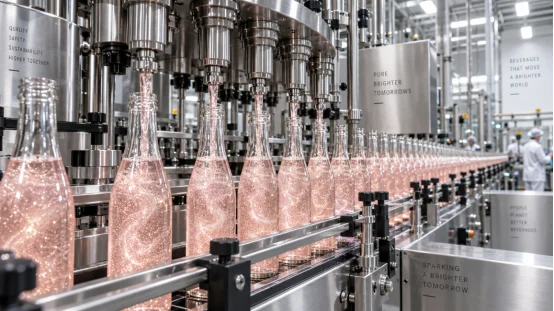
Why Does Luster Dust Behave Differently at Production Scale?
Scale adds time between mixing and filling. On automated beverage bottling lines, product can sit in a day tank, pass through pipework, pause at an accumulation table, and wait in a bottle. Each stage changes the visible swirl.
Settling, Clumping, and Line Speed
Glitter settling depends on particle size, density, liquid viscosity, and hold time. Carbonation, alcohol, acidity, sugar, and temperature also shape the result. A thin beverage usually needs low-shear circulation or tank agitation. Excess agitation can pull in air or disturb carbonation.
Humidity and wet tools create glitter clumping before the powder reaches the drink. Close packs between charges, use a dry scoop, and let sealed cold packs reach room temperature before opening. Condensation on a cold liner is easy to miss.
Choose a Dosing Point That Fits the Process
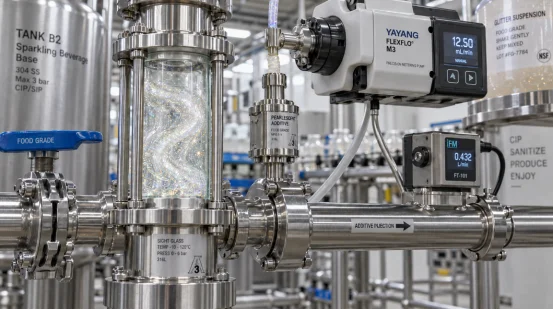
Luster dust injection can take place in a blend tank, recirculation loop, or product pipe. Tank addition gives particles more wetting time. Inline addition allows fast recipe changes and a short residence time. Place the injection point upstream of a sanitary mixer, with enough pipe length for dispersion before the filler bowl.
Feed a prepared luster dust suspension through a closed metering path. The liquid feed is easy to meter and contain, and it limits dry pockets in filled bottles.
Which Dosing Method Fits Your Bottling Line?
Your production pattern, beverage behavior, and cleaning access guide the choice. An edible luster dust dosing system should deliver the approved dose during ramp-up, short stops, and batch close.
Batch Slurry Addition
For long runs, pre-wet food-grade glitter in a measured portion of beverage base. Add the slurry under agitation, then circulate until samples from the top, middle, and outlet look similar. This method suits lines that dedicate a tank to one batch.
Record powder mass, carrier volume, mixing time, temperature, and agitation speed. Keep lots separate so batch traceability remains clear.
Metered Inline Injection
An inline dosing system uses an agitated make-up vessel and sanitary metering pump. Controls link pump output to beverage flow, so beverage glitter dosing follows line speed.
Test the suspension before selecting a pump. Particle size, viscosity, and solids affect pump choice. Short, wide tubing reduces deposits. Put a sample valve after the mixing point and keep product fittings accessible.
Direct Automated Powder Dosing
Automated powder dosing suits batch tanks when the feeder contains dust and delivers a verified mass. A loss-in-weight feeder records mass through a sealed transfer path. Add powder into a moving liquid zone, then check for floating rafts and wall deposits.
How Do You Set and Verify the Dose?
Start with the supplier’s instruction and approved bench sample. Test the actual beverage, package, and hold time. Dosing accuracy covers appearance, mouthfeel, label declarations, and permitted color use in the sales market.
Calculate the Feed Rate
Calculate powder-equivalent feed from beverage flow and target concentration. At 0.08 grams per liter and 6,000 liters per hour, the line needs 480 grams per hour. Convert that figure to slurry flow using the slurry concentration. Recalculate after dilution or recipe changes.
Calibrate with Mass, Time, and Samples
Run dosing pump calibration with the production suspension. Collect discharge for a fixed time, weigh it, and repeat at low, normal, and high rates. Three consistent collections produce a working curve. Compare ingredient mass with finished volume at batch close.
For beverage batch testing, inspect bottles at start-up, steady running, restart, and batch end. View them under one light after five minutes, thirty minutes, and the longest planned hold. Bottle-to-bottle consistency needs a written visual limit or instrument reading tied to an approved sample.
How Do You Control Stops, Cleaning, and Records?
A ten-minute label fault can leave particles in a hose. Your control recipe should state what the agitator, circulation loop, and dosing pump do during each stop length.
Build Stop and Restart Logic
For a short stop, keep the vessel agitating and pause dosing with beverage flow. For a longer stop, follow the validated circulation or drain routine. On restart, divert units for inspection until flow ratio and appearance return to range. One dead leg can hold a surprising streak of concentrated shimmer.
Write a Clean-in-Place Procedure
The clean-in-place procedure must cover the vessel, pump head, injection quill, tubing, mixer, sample valve, and return line. Use the site’s validated check and inspect removable parts. Glitter can remain visible after a rinse. Record the cycle, inspection, and release before the next product enters.
Keep the ingredient lot, opening date, dose, calibration, beverage batch, downtime, rejected units, and cleaning record together. That file traces a complaint to one run.
What Should You Confirm with an Ingredient Partner?
A line trial needs an ingredient specification that matches the hardware. Ask for ingredient details, particle options, storage, pack configuration, lot format, and market documents. Request enough sample for bench work and a short run.
YAYANG’s edible luster dust range gives beverage teams a place to compare food-use shimmer options. YAYANG can discuss sample selection, particle style, pack size, storage guidance, and lot documentation around your beverage base and feed method. A YAYANG product inquiry can begin with four useful details: beverage type, bottle volume, hourly flow, and planned dose. Those inputs define the line trial.
FAQ
Q1: Can you add dry luster dust directly to a bottling line?
A: A controlled slurry usually feeds more evenly. Direct powder addition suits a batch tank with sealed mass dosing, active wetting, and a verified dispersion step.
Q2: How do you prevent glitter settling in the dosing tank?
A: Use validated low-shear agitation or circulation, keep the vessel geometry free of dead zones, and test samples through the full production hold time.
Q3: Where should an inline luster dust injection point sit?
A: Place it before a sanitary mixing section and allow enough pipe length for dispersion before the filler. Include a downstream sample point.
Q4: How often should you check dosing accuracy?
A: Check during start-up, steady production, restarts, and batch close. Recalibrate after a formula, slurry concentration, pump, tubing, or speed-range change.
Q5: What records support batch traceability?
A: Link the ingredient lot and opening date to the dose, calibration, beverage batch, downtime log, finished volume, inspection results, rejected units, and cleaning release.