
Color trends in 2026 are not just about what looks good on a mood board. In food decoration, a trend only “sticks” when you can repeat it at scale, across batches, and across real production conditions. That is why edible luster dust trends are shifting toward performance talk: coverage, shine uniformity, storage behavior, and how the dust behaves on fat-rich vs water-rich surfaces. If you buy or develop decorated chocolates, biscuits, fondant cakes, or beverage visuals, this guide breaks down the edible luster dust directions that matter, plus the practical limits that come with each.
Trend 1: Soft Metallic Neutrals: Champagne Gold and Pearl White
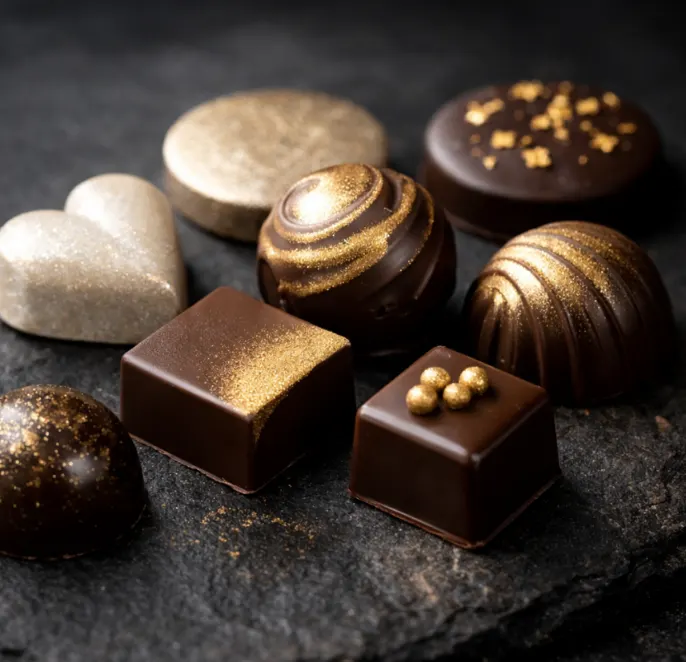
Quiet, low-saturation metallic finishes are taking more shelf space in premium confectionery. This is not “less color.” It is more control. You get a calm, high-end look that works under warm shop lighting and harsh phone flash, which is a real-world test whether anyone admits it or not.
Why It Matters in 2026
Champagne gold luster dust and pearl white luster dust fit the “soft premium” mood. They signal craftsmanship without shouting. They also bridge seasons better than loud holiday palettes, so you can reuse the same decoration concept beyond December.
Performance and Stability Notes
This trend depends on surface shine consistency more than deep pigment load. On chocolate shells, cocoa butter compatibility matters. If the particle spread is uneven, you get patchy highlights that look like handling marks. A practical check: if a molded chocolate sits at 4°C for a day, the shine should still look even when it returns to room temperature.
Where It Works Best
Use this for hand-crafted chocolates, wedding desserts, and gift-box assortments. If buyers ask for edible gold luster dust, this is often what they mean in practice, especially when they want a refined finish rather than a loud metallic plate. For a product-first route, point them to edible luster dust for food decoration and keep the discussion tied to the surface and the process, not just the color name.
Trend 2: Matte and Luster Contrast: A Texture-First Design Move
This is the most “designer” trend on the list, yet it is also one of the most practical. You do not need a new shade. You need a plan for where shine goes and where it stops. That is where your decoration starts to look intentional, not accidental.
Why It Matters in 2026
More brands are using matte and luster contrast to raise perceived value without adding heavy color. A small highlight on an edge, logo, or geometric pattern can do more than full-surface shimmer.
Performance and Stability Notes
This is all about selective luster application. The dust must sit where you put it. If it drifts, the contrast disappears. On dry surfaces, you can use a brush. On slightly tacky surfaces, you need steady coverage or it clumps. A quick reality check: full-surface shine hides mistakes, but contrast exposes them. That is why your team will care about repeatability.
Where It Works Best
Great for molded chocolates, stamped cookies, and fondant pieces where you can control geometry. It is weaker on wet, irregular surfaces where the boundary line blurs fast. If you want a clean place to start sourcing and testing, browse food-grade luster dust options that are made for decoration work, not bulk coloring.
Trend 3: Mineral-Based Demand and Compliance Pressure
Regulatory pressure and customer expectations are pushing decorative ingredients into the same scrutiny as core formulas. In many projects, you are not “choosing a pretty dust.” You are choosing a documentation path: COA, traceability, and market access.
Why It Matters in 2026
As more markets tighten review of synthetic colors, decorative ingredients get pulled into the conversation. That is why mineral-based luster dust demand keeps rising in cross-border product planning. It is less about a label claim and more about whether your product can ship without drama.
Performance and Stability Notes
Mineral-based does not mean “problem-free.” Your real concerns are batch consistency, purity, and heavy metal control. You also need to think about stability drivers that show up across color systems: light, heat, pH exposure, and metal ion sensitivity in certain applications. Those factors are famous for shifting color behavior in other pigments, and decoration is not magically exempt.
Where It Works Best
This trend fits brands selling into multiple regions and anyone building a “clean label food decoration” story with restraint. Use that phrase once, then move on. Buyers trust specifics more than slogans.
Trend 4: Dynamic Fluid Visuals in Beverages
This trend is real, and it is also where careless writing gets you in trouble. Social media loves swirling sparkle. Production teams love consistency and fewer complaints. Both can be true, but only inside the right boundaries.
Why It Matters in 2026
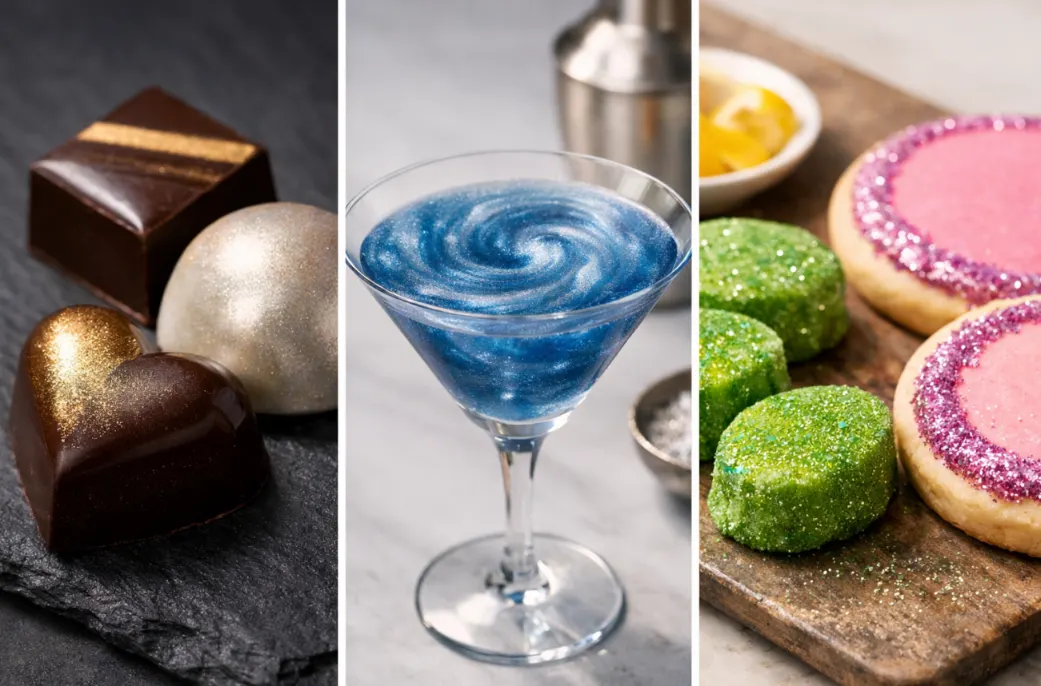
TikTok and Instagram keep pushing drinks that look alive. That pushes demand for edible luster dust in beverages and a strong shimmering beverage effect that shows movement in the glass.
Performance and Stability Notes
Here is the hard part: luster dust dispersion is not the same as long-term suspension. Sedimentation is normal in many liquids. The visual depends on beverage viscosity impact, alcohol content, sugar level, and serving timing. In other words, the same dust can look great in one cocktail and flat in another. This is why pre-testing matters.
Where It Works Best
Best for cocktails, spirits, and limited-time drinks made for immediate consumption. If you want a friendly, practical reference point for beverage visuals, link readers to creative ways to use edible glitter in cocktails and party beverages. It keeps the conversation honest: visuals are the goal, not “perfect stability forever.”
Also, you may see people search the topic as luster dust edible. That wording is clunky, but it shows up, especially in global sourcing. Use it once and move on.
Trend 5: High-Contrast Accents: Gold, Copper, and Dark Pearl
Soft tones dominate premium lines, yet bold accents are not going away. The shift is how they are used: smaller, sharper, and more deliberate.
Why It Matters in 2026
High-saturation looks still sell in party and seasonal moments. Think of this as “signal color.” A small hit of shine can make a product look custom without turning the whole surface into a mirror.
Performance and Stability Notes
This is where control matters most. High-contrast luster dust can look messy if coverage is uneven. Use limited-area decoration and treat it like a highlight, not a paint job. In production, that often means setting a clear standard for coverage area and brush technique.
Where It Works Best
Great for decorative confectionery highlights, gift-ready chocolates, and limited editions. If buyers ask for a gold luster dust accent, they often want a controlled finish that reads well in photos and in-store lighting, not a fully metallic product.
Where Your Sourcing Choice Starts to Matter
If you are building decorated products for 2026, you need more than a color list. You need a supplier that can talk through application limits, documents, and repeatability. YAYANG has focused on effect pigments since 1999, covering pearl, glitter, metallic, and other specialty powders used across food, beauty, and industrial applications. The food line includes edible luster dust solutions for food decoration, built for visual impact while keeping a practical buyer mindset: batch consistency, clear specs, and the paperwork buyers ask for when products cross borders. If your project involves chocolates, confectionery, or beverage visuals, it helps when the supplier speaks in surfaces, storage, and process steps, not just shade names.
FAQ
Q1: How do you choose edible luster dust for chocolate without getting patchy shine?
A: Start with the surface: cocoa butter, compound coating, or chocolate. Then test for even reflection after cooling and after returning to room temperature. Ask for a COA and a clear spec so the finish stays consistent across batches.
Q2: Is edible gold luster dust the same as other gold food colors?
A: Not really. In decoration, “gold” often means a metallic surface effect, not bulk coloring. The best match depends on your base color, your coating, and how much contrast you want. Use small-area tests before locking a design.
Q3: Can you use edible luster dust in beverages and expect it to stay suspended?
A: Treat suspension as a “serve-time effect,” not a shelf-stable promise. The swirl depends on viscosity, alcohol, and sugar. For bottled drinks, plan extra testing and keep expectations realistic.
Q4: What documents should you ask for when buying food-grade luster dust?
A: Ask for TDS and COA at minimum. If you sell into specific markets, confirm the compliance needs early. Storage guidance and shelf-life info also matter for inventory planning.
Q5: How should you store edible luster dust to keep performance stable?
A: Keep it sealed, dry, and away from heat and strong light. Many color powders are managed like other food additives: closed packaging, cool storage, and a defined shelf life. Always follow the supplier’s spec sheet for your exact product.