
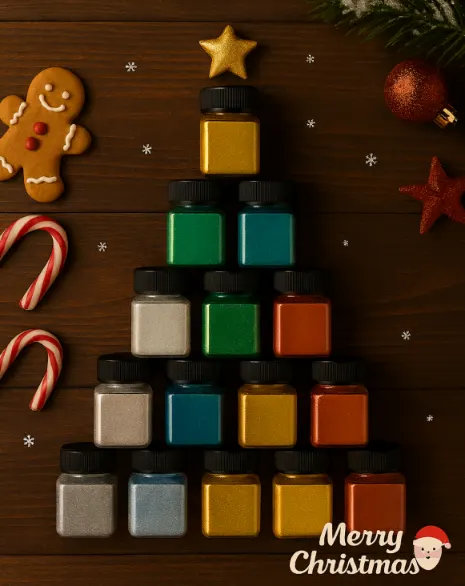
Hi, if you run a bakery plant or a food factory, Christmas 2025 probably means one thing: a lot of SKUs in a very short time. Shiny cakes, metallic cookies, glossy chocolates, all need to move through the line without drama. Luster dust can give you the festive look buyers want, but not every product on the market is suitable for high-volume work. Some are only decorative, some do not meet food regulations, and some fade halfway through the season. This guide walks you through what to check before buying luster dust for factories, so you pick luster dust for food manufacturers that fits both your QA rules and your holiday schedule.
Key Safety Requirements When Buying Luster Dust for Christmas 2025
Before you think about colors, you have to think about safety. Once luster dust goes on a cake or chocolate, your factory owns the risk. That is why many QA teams now talk about luster dust safety standards for food manufacturing in the same way they talk about any other food additive.
You can treat it like a checklist. You want to know how to verify if luster dust is truly edible, what documents back that claim, and how that product fits food manufacturing requirements for edible luster dust in your markets. When you choose a food-grade luster dust for baking, you are really choosing how safe your Christmas line looks in the next audit.
Food-Grade Labeling and Compliance Documentation
First, the label has to be clear. It should say “edible” or “food-grade” and not just “non-toxic” or “for decoration only”. Non-toxic craft powders may still contain materials that are not approved as food additives. You need a full ingredient list, batch number, production or expiration date, and notes about local standards such as GB codes or similar rules in your export markets.
For bulk work, ask for TDS and COA. These should show pigment type, possible heavy metal limits, microbiological limits, and any allergen notes. Many manufacturers also prefer products that come with HACCP, ISO, HALAL or KOSHER background because it makes later audits easier. If a supplier hesitates when you ask for these, that is already part of your luster dust supplier checklist for food manufacturers.
Key Checkpoints When Buying Luster Dust for Christmas 2025
The table below sums up the main points QA and purchasing teams usually care about when they look at luster dust offers for Christmas lines.
| Checkpoint | What You Should Check | Why It Matters | Where To Find It |
| Food-grade labeling | Clear “edible” or “food-grade”, not just “non-toxic” | Confirms the dust is intended for use on food | Product label, spec sheet |
| Full ingredient list | Pigments, carriers, anti-caking agents, allergens | Lets QA review safety and regulatory fit | Label, TDS |
| Regulatory notes | References to GB or other local regulations | Shows the product is designed for regulated markets | TDS, supplier statement |
| Safety documentation | COA with heavy metals, microbiology, batch number | Supports audits and complaint handling | COA for each batch |
| Certifications (if needed) | ISO, HACCP, HALAL, KOSHER, etc. | Simplifies export and customer approvals | Certificates from supplier |
| Stability performance | Basic data on heat, light, and pH stability | Reduces risk of fading or off-color products | TDS, internal test records |
| MOQ and pack size | Pack weight, minimum order quantity | Affects storage, cash flow, and production planning | Quotation, contract |
| Color consistency | Batch-to-batch color tolerance or ΔE control | Keeps finished goods looking the same all season | Supplier QC policy, samples |
| Lead time and backup stock | Production lead time and peak-season stock strategy | Avoids shortages during Christmas peaks | Supplier communication, deals |
This kind of simple list makes it easier for QA and purchasing to talk in the same language.
Ingredient Transparency and Stability Considerations
After safety, you care about how the dust behaves on the production line and in real storage. In practice, you want to know how to choose food-grade luster dust for mass production, not just for one photo shoot.
Many luster dust systems combine pigments with carriers such as starches or other food additives, sometimes plus anti-caking agents. Synthetic pigments often give stronger color and higher stability to light, heat, and pH changes than many natural sources, which may fade or shift over time. This does not mean natural options are useless, but you need to match them with the right products and shelf lives.
You can build a simple internal protocol on how to test luster dust stability for baked goods. For example, test color after baking, after blast chilling, and after expected shelf life. Include color stability testing for Christmas desserts in your trial plan instead of only checking the first day.
Performance Under Heat, Moisture, and Storage
Bake, freeze, chill, and transport all create small stresses. Some pigments resist heat very well but dislike high humidity. Others react to pH, especially if the dessert contains fruit acids or cream cheese. Your QC team can record these points and connect them with food manufacturing requirements for edible luster dust in your spec sheets.
You do not need to run a huge lab. Simple side-by-side trays are enough to compare options. Run one batch through your oven, another only air dried, and keep both under your normal storage conditions. A quick visual check after one week and after one month often tells you which product is more stable.
Compatibility With Different Christmas Products and Production Lines
Christmas lines rarely rely on a single item. You may have butter cookies, gingerbread, chocolate pralines, mousse cakes, and maybe even jellies or drinks. Luster dust for food manufacturers has to fit this mix, or at least the most important parts of it.
Water-soluble systems fit jellies, mochi, beverages, and some frozen desserts. Oil-soluble systems usually play better with chocolate, fat-based coatings, and baked goods. If your line includes both, you may choose one system that works “well enough” across many bases, or keep two focused systems for key products. During planning, it helps to think about best luster dust colors for Christmas bakery production too.
Matching Luster Dust Types To Christmas Product Types
The overview below links typical Christmas products with suitable luster dust focuses, so you can see at a glance where to start.
| Product Type | Typical Base | Recommended Luster Dust Focus | Notes For Production |
| Chocolate pralines and shells | Fat-based chocolate coating | Oil-friendly metallic gold, bronze, jewel tones | Brush or spray; avoid adding too much liquid on the surface |
| Butter cookies and gingerbread | Baked dough | Strong gold, red, green, bronze | Test bake stability; some greens need a light base under them |
| Christmas cakes and logs | Sponge plus cream or fondant | Gold, silver, red, green, pearl, ice blue | Smooth fondant or glaze shows shine best |
| Macarons and small pastries | Almond shells, mousse toppings | Pearl, ice blue, rose gold, soft pink | Use soft tones for premium lines; avoid overloading the shell |
| Jellies and puddings | Water-based gel systems | Water-compatible pearlescent effects | Check pH and storage stability |
| Festive drinks and cocktails | Liquid, often clear or light | Fine pearlescent shimmer powders | Small amounts only; confirm the product is fully edible |
| Frozen desserts | Ice cream, frozen mousse | Stable metallic and pearl tones | Test freeze–thaw cycles for any color shift |
Once you have this kind of map, it becomes easier to decide which tests matter most for your own catalog.
Evaluating Suppliers for Christmas Production Needs
Once you know what you need technically, you can move back to suppliers. At this point, you are not just asking what to check before buying edible luster dust for factories, you are also asking how to evaluate edible luster dust for Christmas production at scale.
A few simple questions can save many headaches. Can the supplier repeat color across batches? Do they have backup stock for peak season? Do they react fast if you need extra documents for an audit?
Documentation, MOQ, and Consistency Testing
For B2B buyers, documentation, MOQ, and color consistency matter as much as the price. You want clear COA and TDS for every shade, flexible but realistic minimum order quantities, and proof that color difference between batches stays within your tolerance.
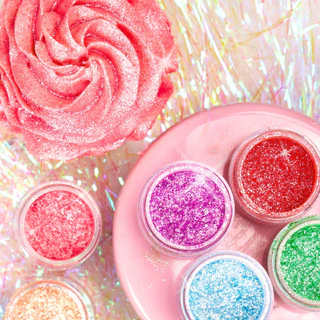
This is where an edible luster dust set can help. A well-designed set lets you cover most Christmas themes from one supplier instead of juggling many products. You can also check how a supplier handles complaints or sample requests. That behavior is as important as a shiny catalog.
Planning Color Palettes for Large Christmas Orders
Even for big factories, too many colors create confusion. A limited palette is often more powerful and more reliable. When you plan luster dust for Christmas production, think in palettes, not single shades.
One classic route is to keep a core of gold, silver, red, and green, then add pearl, ice blue, and one bronze or rose gold for variety. That small group can create traditional, Nordic, and modern looks just by changing how much of each you use.
Building a Practical and Efficient Color Set
From a factory point of view, a practical set is one that decorators remember easily. For example, you can mark gold, silver, red, green as “everyday Christmas”, pearl and ice blue as “winter premium”, and bronze as “rustic” line. Train staff using this language, not just shade codes.
Over time, your team will know which shade goes where without checking manuals. That reduces errors, cuts waste, and gives your sales team the stable look they need across different customers and markets.
How YAYANG Supports Manufacturers With Stable Luster Dust Systems
YAYANG works in the color ingredients space with a focus on products that behave well in real factories and shops, not only in the lab. The company offers different types of food color systems, including water-soluble and oil-soluble formats that can cover drinks, jellies, baked goods, chocolate, and frozen items. For luster dust users, this means you can discuss not just shade charts but also heat resistance, pH impact, and process fit in one conversation.
YAYANG also pays close attention to regulatory needs, such as GB standards and common export certifications like ISO, HACCP, HALAL, and KOSHER, and supports buyers with TDS, COA, and other technical files when required. Pack sizes, minimum orders, and color sets are designed with both craft bakeries and larger plants in mind, so you can trial a multi-color system and then extend it across Christmas lines once your QA team is happy.
FAQ
Q1: Does every luster dust marked “edible” suit factory use?
A: Not always. You still need to see the documents and test it on your own products.
Q2: How early should Christmas luster dust be booked?
A: Many factories prefer to lock in suppliers and stock two to three months before the peak.
Q3: Can the same luster dust work on chocolate and cookies?
A: Often it can, but it is safer to run small tests on each base before full production.
Q4: Is natural luster dust always better than synthetic?
A: Not in every case. Natural feels cleaner for some brands, but synthetic is usually more stable.
Q5: How many shades does a factory really need for Christmas?
A: A focused set of around eight to ten colors is usually enough for a full seasonal range.