
A jar can look metallic online, then turn pale yellow on your cake. That is frustrating when a wedding tier or cookie lettering needs a clean finish. Edible gold luster dust is reflective rather than fully opaque, so its final color changes with the shade, base, surface, coats, light, and camera settings.
This edible gold luster dust color guide compares four directions and explains why gold luster dust looks yellow instead of gold. It also shows how to choose edible gold luster dust for your surface, not just a product photo.
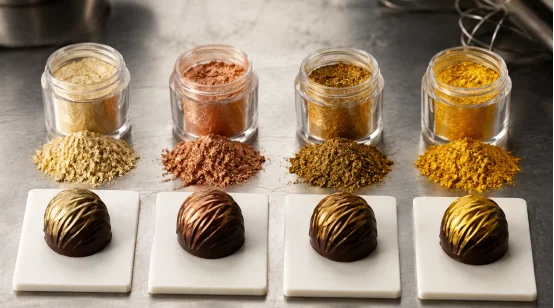
Which Gold Shade Fits Your Finish?
The best edible gold luster dust matches your base and design. A wider edible luster dust range helps because “gold” alone tells you little.
Champagne Gold Luster Dust: Soft and Neutral
Champagne gold luster dust has lower yellow saturation. On white or ivory fondant, it gives a quiet glow rather than a yellow stripe. It is often the best gold luster dust for wedding cakes. If your question is which gold luster dust looks least yellow, start here, then test it.
Rose Gold Luster Dust: Warm and Romantic
Rose gold luster dust carries pink, red, or copper notes. It looks rosy on white fondant and more coppery on dark chocolate. Rose gold vs copper luster dust is not just naming: copper usually reads more orange or brown.
Antique Gold Luster Dust: Deep and Vintage
Antique gold luster dust has muted brown, brass, or old gold tones. It suits embossed fondant and dark chocolate. In an antique gold vs bright gold comparison, antique gold looks aged; bright gold looks cleaner and more yellow.
Bright Gold Luster Dust: Bold but More Yellow
Bright gold luster dust gives classic, high impact gold for lettering, crowns, and festive details. Yet bright gold luster dust looks yellow more easily on white or under warm lights. Champagne gold vs bright gold is a choice between soft neutrality and vivid traditional gold.
Why Does Edible Gold Luster Dust Look Yellow Instead of Metallic?
When a gold finish disappoints, the powder is only one part of the story. The useful question is not simply “why does gold luster dust look yellow?” It is “what is showing through the gold layer?”
Base Color Changes the Result
White fondant exposes every warm undertone. Brown, black, caramel, or ochre bases can make the same dust look deeper. The best base color for gold luster dust often sits close to the target shade. Tan supports bright gold, blush supports rose gold, and dark brown supports antique gold.
Thin or Watery Paint Shows Too Much Base
One coat vs two coats of gold luster dust can look surprisingly different. A thin first coat may leave scattered yellow sparkle; two light coats create a more continuous surface. When learning how to mix gold luster dust, add liquid a few drops at a time. Too thin streaks, too thick clumps. One practical guide suggests a small pinch of dust, two or three drops of clear liquid, and two thin coats.
Light and Photography Shift the Color
Gold luster dust under warm light gains yellow and orange. Gold luster dust looks different in photos because exposure, white balance, reflection angle, flash, and editing change the highlight. This is how lighting affects gold luster dust, and why a dark studio sample may look richer than the same shade on a white cake.
How Does Edible Gold Luster Dust Perform on Different Surfaces?
Surface texture matters almost as much as color. Firm, smooth surfaces reflect light cleanly. Soft or rough surfaces break that reflection into shimmer.
White Fondant
Edible gold luster dust on white fondant shows every yellow, pink, or brown cast. Champagne gold is softer; bright gold is stronger but may look more yellow. For the best gold luster dust for fondant, test dry dust, one wet coat, and two wet coats on a spare piece.
Dark Chocolate
Edible gold luster dust on chocolate often looks richer because the dark base creates contrast. Antique and bright gold work well on cold, dry chocolate. Rose gold may shift toward copper. The best gold luster dust for chocolate depends on whether you want old brass or bright jewelry gold. Avoid condensation, which can leave spots.
Buttercream
Edible gold luster dust on buttercream gives softer, less even coverage. Chill the cake so the brush does not drag. A decorating guide recommends chilling soft buttercream for about 30 minutes, then dry brushing texture or painting firmer details. A little patience here saves patching.
Royal Icing
Edible gold luster dust on royal icing works best after the icing dries hard. Thin wet coats suit lettering and cookies; dry brushing adds a lighter sheen. The firm surface is easier to control than fresh buttercream.
How Can You Make Gold Luster Dust Look More Metallic?
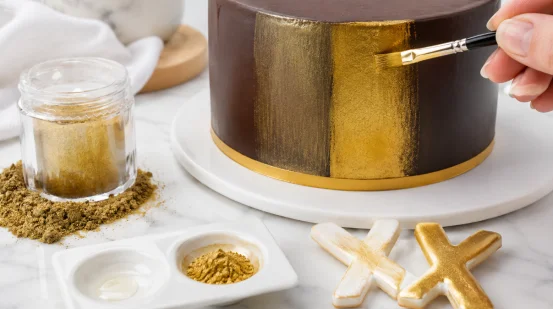
Knowing how to use edible gold luster dust is mostly about coverage. Dry brushing gold luster dust creates a soft glow. Wet application of gold luster dust creates edible gold luster dust paint with stronger color. Official product information states that the dust may be brushed on or mixed with liquid for a paint-like texture.
For gold luster dust dry vs wet, use dry dust for antique texture and wet paint for solid details. To learn how to make gold luster dust look more metallic, test the actual base, mix a small batch, apply two thin coats, and check it in neutral daylight. A cookie corner is enough; no need to repaint a whole tier.
What Should You Check Before Buying?
When deciding which gold luster dust should you buy, look beyond the powder in the jar. A useful product page shows light and dark bases, dry and wet application, and the number of coats. Clear food use labeling matters too. “Non-toxic” is not the same as edible; the decorating guide advises checking that the product is labeled edible.
Review an E171-free edible luster dust option as well. The official page lists uses on cakes, cookies, cupcakes, chocolates, and beverages, plus dry or wet application. Its metallic directions include gold, silver, rose gold, and copper.
From Shade Choice to a Repeatable Product Line
Once you know the right gold tone, consistency becomes the next concern. The shade should match across samples, batches, packaging images, and demonstrations. YAYANG works with food grade effect pigments and describes laboratory testing, a dedicated quality department, and inspection processes.
For buyers comparing an edible luster dust manufacturer or supplier, capability goes beyond bulk edible luster dust. YAYANG edible gold luster dust projects can include custom edible luster dust colors from photos or physical samples, approval before mass production, and private label edible luster dust packaging. Its custom color and packaging support helps keep champagne, rose, antique, and bright gold directions distinct.
FAQ
Q1: Why does my gold luster dust look yellow?
A: The shade may have a strong yellow undertone, but a white base, thin coat, watery mix, or warm light makes it more obvious.
Q2: Which gold luster dust looks least yellow?
A: Champagne gold luster dust is usually the safest starting point for a soft, less yellow finish on white or ivory fondant.
Q3: How many coats of gold luster dust do you need?
A: One coat may give enough shimmer. Two thin coats usually improve gold luster dust coverage and create a more metallic result.
Q4: Can you use edible gold luster dust on buttercream?
A: Yes. Chill or crust the surface first, then use light dry brushing or careful wet application.
Q5: Why does gold luster dust look different in photos?
A: Light temperature, exposure, flash, background color, camera angle, and editing all change the metallic reflection.