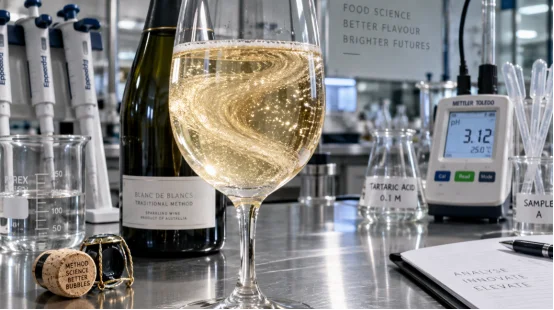
When you formulate a shimmering wine, the powder joins a complex liquid system. Acidity, alcohol, sugar, carbon dioxide, temperature, and mixing all affect particle movement and aroma release.
A stable formula keeps the visual effect repeatable while preserving the wine’s intended taste.
Why Do Acidity and Alcohol Stability Matter in Shimmer Wine Formulation?
Acidity and alcohol influence far more than shelf stability. They affect color, aroma perception, particle wetting, and the time shimmer remains visible after pouring.
How pH Shapes Shimmer Behavior
Sparkling wine pH influences microbial control, color tone, and particle wetting. A lower pH can change the surface charge of suspended particles and alter their movement through the wine. The best pH for sparkling wine shimmer is a tested range for your exact wine and shimmer material. Each recipe needs its own confirmation.
The referenced Romanian sparkling wine study recorded pH values from 3.03 to 3.39 and total acidity from 6.00 to 6.53 g/L as tartaric acid. These values supported freshness and structural balance. You can use them as development references, then confirm acid-alcohol compatibility through bench trials.
How Alcohol Changes Dispersion and Aroma
Ethanol lowers surface tension and changes solvent strength. This shift can accelerate wetting, move particles toward the surface, or cause an unsuitable powder to settle. Alcohol also carries volatile compounds into the headspace, so changes in glitter dispersion may affect how fruit, floral, and yeast notes reach the nose.
The study measured wine alcohol content from 13.03% to 13.53% by volume. This narrow range gave the researchers a consistent basis for sensory comparison. Keep alcohol, sugar, and serving temperature steady when comparing shimmer systems.
What Does Research Say About Sparkling Wine Composition?
The study examined three native grape varieties after traditional-method production. Samples spent either nine or thirty-six months on lees. Researchers assessed acidity, pH, residual sugar, bottle pressure, color, volatile compounds, and sensory properties together.
Useful Benchmarks for Acidity and Alcohol
Residual sugar ranged from 1.85 to 3.67 g/L, consistent with Brut sparkling wine. Volatile acidity remained between 0.36 and 0.42 g/L. Bottle pressure measured 6.2 to 7.4 bar, producing active effervescence and persistent foam.
These figures can guide control limits for shimmer wine formulation. Record total acidity, sparkling wine pH, alcohol, residual sugar, and pressure for every pilot. Review any batch that shows a measurable composition change after adding shimmer.
Why Sugar, Pressure, and Volatiles Matter
Sugar affects viscosity and sweetness perception. Carbon dioxide creates movement that helps fine particles circulate, while vigorous agitation can produce excess foam and uneven dosing.
The researchers identified 36 volatile constituents, including esters, higher alcohols, terpenes, aldehydes, and fatty acids. Longer lees aging developed complex aromas while retaining floral and fruity traits. This finding supports one practical rule: evaluate flavor profile preservation in the finished wine. Water can support early handling checks, but it cannot reproduce the wine’s complete aroma system.
How Can You Add Edible Luster Dust and Keep Flavor Stable?
Start with the ingredient file. The powder should be sold for edible food or beverage use in your destination market. Request an ingredient statement, allergen information, lot format, storage conditions, and use instructions. These records support traceability from trials through commercial production.
Select a Food-Grade Shimmer
Choose a particle style that suits the serving format. Fine particles can create a soft haze. Larger platelets produce a stronger flash and may settle sooner.
Check food-grade shimmer at the target pH and alcohol level. Particle size alone does not predict performance because coatings, density, and surface behavior also affect glitter dispersion. Request a sample for testing before approving production quantities.
Set the Dose Through Bench Testing
Run beverage batch testing with the actual wine, bottle, closure, and glass. Prepare three or four dose points around the supplier’s stated use level. Record grams per liter, addition order, mixing time, temperature, carbonation, and holding time.
Taste each sample blind when possible. Score acidity, sweetness, bitterness, fruitiness, aroma intensity, and finish alongside shimmer strength. This process answers “does edible luster dust change wine flavor?” with evidence from your recipe. It also prevents an eye-catching visual target from pushing the dose past the wine’s sensory limit.
What Is a Practical Alcohol Stability Testing Workflow?
Alcohol stability testing for shimmering wine works well as a short matrix with defined checkpoints. Keep the base wine constant and change one factor at a time. You can then identify which condition caused a visual or sensory shift.
Build a Small Matrix
Test at least two temperatures, two holding periods, and three shimmer doses. A practical matrix may include 4°C, 10–12°C, and room temperature, with readings after five minutes, thirty minutes, four hours, and twenty-four hours.
Measure pH, visual intensity, sediment height, foam behavior, and aroma. The research tasting panel assessed sparkling wines at 10–12°C, making this range a useful sensory checkpoint. Include warmer conditions that may occur during filling, transport, or event service.
Check Flavor and Appearance over Time
Use a clear glass and a bottle view. Photograph every sample from the same position, swirl gently, and repeat the image. A stable sample maintains a recognizable shimmer pattern and clean aroma. Clumps, a dull surface, metallic notes, or a compact sediment layer indicate that the dose or particle system needs adjustment.
How Do You Prevent Sediment in Shimmer Wine?
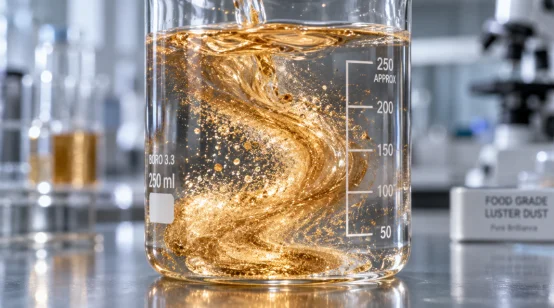
Sediment control begins with dry powder handling and continues through filling and service. Keep edible luster dust sealed in a cool, dry, low-odor area. Use a dedicated dry scoop and close the container after each portion. Moisture creates clumps that disturb dose accuracy and glitter dispersion.
Control Mixing Energy
Add the measured powder after the wine reaches its intended serving condition. Use a gentle swirl or a validated low-shear mixer. Strong mixing can drive foam, release aroma quickly, and create a visual burst that fades during holding. Record the motion, duration, or mixer setting in the batch sheet.
Match Packaging and Service Conditions
Bottle shape, headspace, closure, and shipping vibration all affect particle movement. Check bottles after vibration, chilling, and upright storage. A transport simulation gives you useful evidence before distribution.
Provide a short serving instruction such as “Chill, pour, and swirl gently.” Record the powder lot and opening date as part of the production or service file.
How Can Technical Supply Support Consistent Shimmer Wine Batches?
Once testing identifies a workable acid-alcohol window, supplier documentation becomes part of the formula. YAYANG’s edible luster dust range provides food-use shimmer options for sample assessment. Ask for particle style, ingredient data, storage guidance, lot format, and pack configuration. These details support beverage batch testing, sediment checks, and release records.
Through the YAYANG website, you can discuss the wine base, target pH, alcohol level, serving temperature, and intended visual effect. A consistent data set helps you compare samples fairly and carry the approved flavor profile into larger batches.
FAQ
Q1: How does acidity affect shimmer wine stability?
A: Acidity changes particle wetting, color response, and microbial conditions. Test pH and total acidity in the finished wine with the selected shimmer.
Q2: What is the best pH for sparkling wine shimmer?
A: Use the range that preserves your wine’s taste and stability. The cited study covered pH 3.03–3.39, which provides a useful reference window for trials.
Q3: How do you prevent sediment in shimmer wine?
A: Use a compatible particle size, measured dose, dry handling process, gentle mixing method, and checks after chilling, standing, and transport.
Q4: Does edible luster dust change wine flavor?
A: The dose, particle surface, or carrier may influence aroma and finish. Blind tasting and timed holding tests reveal changes in the finished recipe.
Q5: What should alcohol stability testing for shimmering wine include?
A: Record alcohol, pH, acidity, sugar, dose, temperature, mixing, pressure, appearance, sediment, and sensory notes at fixed time points.