Private label oil-based food coloring starts with a clear product brief: the food application, target shades, container format, label requirements, and order volume. Bottle size affects how a buyer stores, handles, and uses each color. A defined color set connects the shade targets and formula details to one retail or food-service pack.
Review the current food product range to identify oil-based color options. Confirm available bottle sizes, colors, and OEM services with the supplier because these details vary by product and order specification.
What Should You Define Before Requesting a Private Label Quote?
Start with the finished product and the buyer who will use it. A bakery decorating chocolate needs different shade references and handling directions from an ingredient distributor selling colors to manufacturers. Put those requirements into one brief before asking for bottle or set options.
State the Application and Target Market
List the food matrix, oil phase, processing temperature, target shade, destination market, sales channel, and expected first order. Note whether the color will be used in chocolate, cocoa butter, compound coating, filling, or another fat-based product. The application determines the information a supplier needs to recommend a format.
Build a Product Specification
Ask for the color source, carrier, whether the color is oil-soluble or oil-dispersible, strength, recommended dosage, storage conditions, and shelf life. Record the formula version and the market for every label. Keep product claims tied to documents for the selected SKU.
How Do You Choose Oil-Based Food Coloring Bottle Sizes?
When comparing oil-based food coloring bottle sizes, match the container to the dose, expected use rate, and storage period after opening. A small sample container supports recipe trials. A larger production pack can suit a manufacturer with regular batch use. The supplier’s available sizes and minimum quantities need confirmation for each color and packaging format.
Match the Pack to Usage and Shelf Life
Estimate how much color a customer will use per batch and how often the bottle will be opened. Consider the stated shelf life, storage guidance, and resealing method. Buyers may need sample, pilot, and production quantities to validate the product before choosing a retail size.
Check the Bottle and Case Details
Request the net contents, bottle material, closure and liner, tamper evidence, dispensing method, label area, case count, and shipping dimensions. Confirm that the package protects the product under its stated storage conditions. The quote should identify each size by SKU and include carton configuration.
How Should You Plan Private Label Food Coloring Sets?
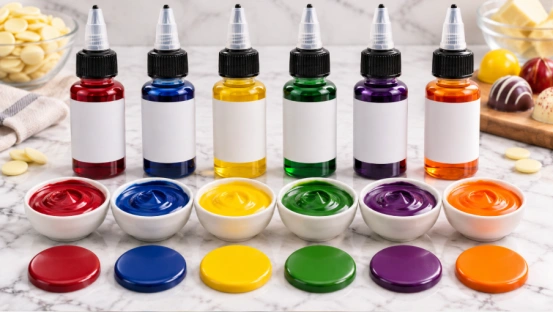
Private label food coloring sets need a defined shade list and a consistent way to identify each color. The set can follow the buyer’s recipes, seasonal demand, or product range. Record the shade name, reference sample, color source, and formula version for every bottle in the set.
Select Colors Around the Customer’s Work
Start with the colors customers use across the intended applications. A chocolate-focused set may need a different palette from a general bakery set. Ask the supplier to confirm which colors are available in the chosen oil-based format, then test each one in the actual food matrix.
Approve Shade References and Labels
Create a physical sample or measured color target for each shade. Compare the color in the finished food under consistent lighting and after the same setting period. Match bottle labels, outer-pack artwork, lot coding, and usage directions to the approved color list.
What Can OEM Food Coloring Options Include?
OEM food coloring can cover several parts of a product order. The supplier may offer an existing color formula with the buyer’s label, selected stock colors in a chosen pack, custom shade development, or a packaging configuration tied to a minimum quantity. Confirm the available options and charges for the specific project.
Private Label and Custom Packaging
Custom food coloring packaging may include bottle labels, color names, instructions, barcode fields, case configuration, and printed retail boxes. Share artwork files, required languages, market details, and pack quantities before requesting a production schedule. Confirm the printed proof against the final product specification.
Formula and Color Customization
Ask whether the supplier can provide an existing formula, a shade adjustment, or a custom blend. Request the color source, carrier, strength, recommended use range, sample lot, and change-control process. A custom color may have a separate development charge or MOQ, so ask for sample, pilot, and production quantities in the quote.
How Do You Compare OEM Suppliers and Samples?
Compare suppliers using the same brief and evaluation steps. A sample should represent the formula, bottle, label, and color set you plan to order. Keep the approved sample with its specification so the production lot can be checked against the same reference.
Run a Product Trial
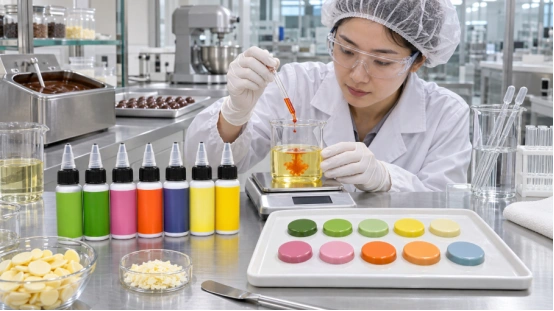
Prepare an uncolored control and several measured color additions within the supplier’s recommended range. Record dose, food matrix, mixing temperature, mixing time, shade, viscosity, gloss, flavor, and set. Test each color separately in chocolate, cocoa butter, or compound coating when those uses appear on the label.
Review the Supplier File
For bulk oil-based food coloring, request a technical data sheet, ingredient and allergen information, dosage guidance, storage and shelf-life details, lot-specific certificate of analysis where available, packaging specification, and regulatory documents for the destination market. Ask how the supplier handles lot coding, retained samples, complaints, and formula or packaging changes.
A Starting Point for Private Label Oil-Based Color
YAYANG’s food product range provides a starting point for wholesale buyers reviewing food-color options. Share your target foods, shades, bottle sizes, set format, destination market, and order volume when asking about private label and OEM options. Request the current specifications, available pack formats, sample terms, and documents for the colors under consideration. The YAYANG website provides a contact route for that product discussion.
FAQ
Q1: What Bottle Sizes Are Available for Oil-Based Food Coloring?
A: Available sizes depend on the color, container, and order specification. Request sample, pilot, and production options with net contents and case configuration.
Q2: How Do You Choose Colors for a Private Label Set?
A: Select shades around the intended recipes and customers. Approve each color in the finished food and record its shade reference, formula version, and label name.
Q3: What Does OEM Food Coloring Usually Include?
A: OEM options may cover an existing formula, private label, bottle and case configuration, a selected color set, or a custom shade. Ask the supplier which options apply to the requested SKU.
Q4: What Should You Confirm Before Printing Custom Food Coloring Labels?
A: Confirm product identity, ingredients, allergen details, use directions, storage, lot coding, required languages, destination-market label rules, and the final artwork proof.
Q5: How Can You Check a Private Label Color Before a Bulk Order?
A: Test a sample in the intended food with measured doses. Record the shade, viscosity, gloss, flavor, set, and formula details, then retain an approved sample for lot comparisons.