You have a cake ready for a child’s party or halal event, then the usual metallic-paint recipe calls for vodka. You can make luster dust without alcohol, but each substitute changes the shine, drying time, and brush marks.
The six options below help with alcohol-free cake decorating. Before mixing anything, check that the dust says edible. A label that says non-toxic or decorative use only does not make it safe to eat. For halal luster dust paint, check the full ingredient list and certification for both the dust and mixing liquid.
How Were the Six Alternatives Compared?
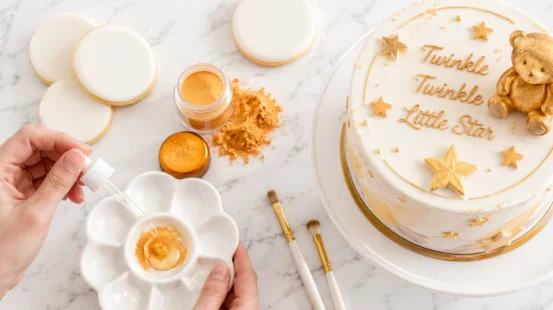
Mix the same amount of dust with each liquid, paint white fondant, then compare color, shine, drying time, brush marks, and tackiness. The reference comparison found that water and lemon juice took about 30 minutes to dry. Both looked less shiny than alcohol-based paint.
Start with 1/4 teaspoon of dust and add liquid one drop at a time. Aim for a texture slightly thicker than watercolor. This basic method answers how to use luster dust without alcohol without flooding the sugar surface.
What Can You Mix with Luster Dust Besides Alcohol?
If you are asking what to mix with luster dust besides alcohol, there are six practical choices. None behaves like fast-evaporating ethanol. Test spare fondant before painting a finished cake.
1. Water
Can you mix luster dust with water? Yes. Water is cheap, neutral in flavor, and easy to find. To learn how to mix luster dust with water, add two drops first, stir, then add more only when the paint feels too thick.
Water produced a thicker mixture than lemon juice in the reference test. It dried in roughly 30 minutes with a matte finish. Brush marks remained visible, so remove excess paint. This works as luster dust paint for fondant or dry royal icing. Too much water can soften either surface.
2. Lemon Juice
Luster dust with lemon juice creates edible gold paint without alcohol and gives a result close to the water version. The tested color looked a little lighter and less shiny than paint made with alcohol. It also needed about 30 minutes to dry.
Expect two or more thin coats. Lemon juice does not leave a dry powder layer, so you cannot buff away streaks. Filter out pulp since a citrus taste may remain.
3. Alcohol-Free Clear Extract
An alcohol-free clear extract needs a close label check. Many clear extracts contain ethanol. The reference notes that alcohol-free versions often use oil or sugar syrup, and those mixtures did not dry well.
Choose a water-based product. Oil-based flavoring may leave non-alcoholic edible paint wet, while syrup-based extract can stay tacky.
4. Diluted Glycerin
Luster dust with glycerin moves smoothly under a brush and gives you more working time. Use food-grade vegetable glycerin. A useful starting mix is one part glycerin to three parts water, then add that blend to the dust drop by drop.
A glycerin-based edible paint medium can reduce brush lines, but extra glycerin slows drying and leaves a sticky finish. Keep it for fine lettering, not stacked cookies.
5. Diluted Clear Corn Syrup
Luster dust with clear corn syrup gives thick coverage and holds pigment in place. Dilute one part syrup with three or four parts warm water before adding it to the dust.
Syrup dries slowly and may remain tacky, especially in humid rooms. Use it for small, same-day accents. Too much syrup or glycerin is often the cause.
6. Alcohol-Free Ready-Made Edible Paint
Alcohol-free ready-made edible paint saves time and often gives smoother coverage. Some premixed paints still contain ethanol. The reference tested one with 14% ethanol and found good shine, a longer wet time, and a waxy dry feel, so that result was not alcohol-free.
For a true alternative, choose a product clearly labeled edible and alcohol-free. A commercial alcohol-free luster dust paint may work better for repeated lettering or detailed cookie orders where consistency matters.
Which Alcohol-Free Option Gives the Best Finish?
The best food-safe metallic paint depends on the surface and drying time. Water is simplest. Lemon juice adds slight flavor. Diluted glycerin handles well but can stay tacky, while syrup suits tiny accents.
If shine matters most, alcohol-free ready-made edible paint is usually the safer place to start, provided the label confirms the formula. For a homemade edible metallic paint without alcohol, water or lemon juice gives the most predictable dry finish.
| Medium | Shine | Drying Speed | Brush Marks | Best Use |
| Water | Low to medium | About 30 minutes | Visible | Fondant and royal icing |
| Lemon juice | Medium | About 30 minutes | Moderate | Small gold details |
| Alcohol-free clear extract | Varies | Slow or may stay wet | Moderate | Test pieces only |
| Diluted glycerin | Medium | Slow | Fewer | Fine lettering |
| Diluted clear corn syrup | Medium | Very slow | Fewer | Same-day accents |
| Ready-made alcohol-free paint | Medium to high | Product-dependent | Usually fewer | Detailed work |
How Can You Prevent Brush Marks in Luster Dust?
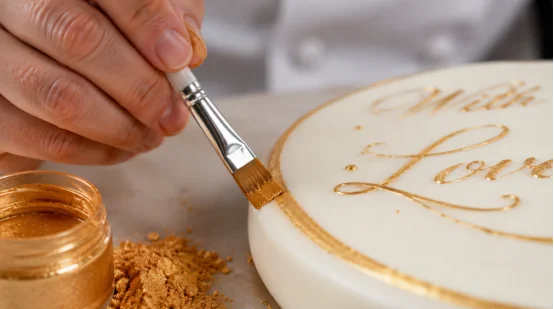
How to prevent brush marks in luster dust comes down to thin coats. Use a soft, food-only flat brush. Let each layer dry, then apply the next in a different direction. Stir often because metallic particles settle.
A gold or yellow base also hides gaps better than white fondant. Do not keep brushing a half-dry area. It lifts the first coat and makes the streaks worse. For luster dust paint for cookies, let every coat dry before packaging.
Can You Use Luster Dust on Buttercream Without Alcohol?
Luster dust on buttercream is harder with water-based mixtures. The reference test found that non-alcohol options could separate across large buttercream areas and fail to give solid color.
Chill the cake until firm, then paint small details with little liquid. For broad metallic sections, paint a fondant or chocolate decoration separately and place it on the cake.
A Practical Look at YAYANG
Good results start with dust that is made for food use, not craft pigment sold beside it. YAYANG supplies effect pigments across food, beauty, DIY, and industrial applications, with a dedicated food range that includes edible luster dust, food coloring powders, liquid and gel colors, metallic palettes, and edible glue.
Its E171-free edible luster dust is described for cakes, cookies, chocolate, and beverages, with metallic and pearl finishes. The company also offers color, packaging, label, and order-size customization. For bakers or private-label buyers, those capabilities make it easier to discuss food-grade documentation and application needs alongside the actual color.
FAQ
Q1: Can You Mix Luster Dust with Water?
Yes. Add a few drops. It needs roughly 30 minutes to dry. The result might show brush strokes and less shine.
Q2: What Can You Mix with Luster Dust Besides Alcohol?
Try water or lemon juice. Alcohol-free clear extract works too. You can also use thinned glycerin, diluted clear corn syrup, or verified alcohol-free ready-made paint.
Q3: How Long Does Luster Dust Paint Take to Dry?
Water or lemon juice blends take roughly 30 minutes. Glycerin and syrup take longer. They might stay sticky if applied heavily.
Q4: Is Alcohol-Free Luster Dust Paint Halal?
Not automatically. Skipping alcohol doesn’t guarantee it. Review every ingredient carefully. Also, look for proper certification.
Q5: Why Is My Luster Dust Paint Sticky?
Your mix might have excess glycerin, syrup, or oil. Heavy coats and humid weather also slow the drying process.