
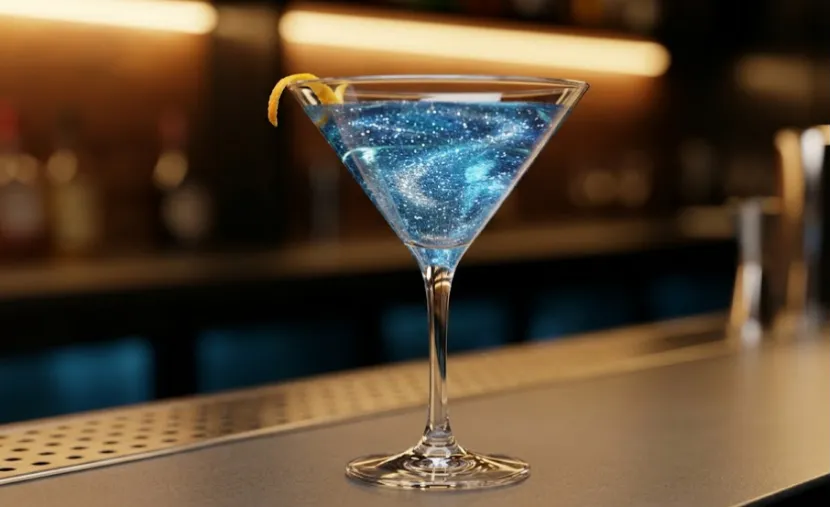
If you are asking is edible glitter safe for drinks, the short answer is yes, but only when the product is truly edible and made for food or beverage use. That sounds obvious, yet this is exactly where buyers get tripped up. A jar can look pretty, shimmer hard under the light, and still be the wrong thing to pour into a cocktail glass. Public safety guidance in the U.S. is blunt on this point: glitter and dust products should not go on food unless they are specifically manufactured to be edible, and certain pearlescent pigments are only allowed in defined beverage uses and limits.
That is why your first question should never be “Does it sparkle nicely?” It should be “Can you drink edible glitter safely, and how do you prove it before buying?” If you start there, half the confusion disappears.
Can You Drink Edible Glitter?
You can, but only if the glitter is sold as a food product, not a craft decoration with a food photo on the label. For drinks, the real issue is not the shimmer effect. It is the product category, the ingredient trail, and whether the supplier treats it as a food item from the start.
When the Answer Is Yes
The answer is yes when the jar clearly says edible, shows an ingredient list, and is presented for food or beverage use. In the U.S., mica-based pearlescent pigments are permitted in certain cocktails, cordials, liqueurs, and some mixers at specified limits, which tells you something important: drink glitter can be safe, but it still has to sit inside food rules. A product page like edible flavor glitter also gives a useful buyer signal when it is placed inside a food application range rather than a beauty or DIY category.
When the Answer Is No
The answer is no when the label says only “non-toxic,” “for decoration only,” or “remove before consumption.” Those phrases are not small technical details. They are the whole story. “Non-toxic” does not mean edible glitter safe for drinks. It only tells you the product is not expected to cause harm from limited contact. That is very different from something made to be swallowed in a drink.
What Does Food-Grade Edible Glitter Mean?
This is the part buyers often rush through, then regret later. Food grade edible glitter should mean the product is intended for use in food, labeled for that purpose, and backed by ingredient information that fits food applications. If the seller cannot show that clearly, the glitter has not earned a place in your drink. A sparkly martini is fun. A mystery powder at the bottom of the glass is less charming once you think about it for five seconds.
Read the Front Label First
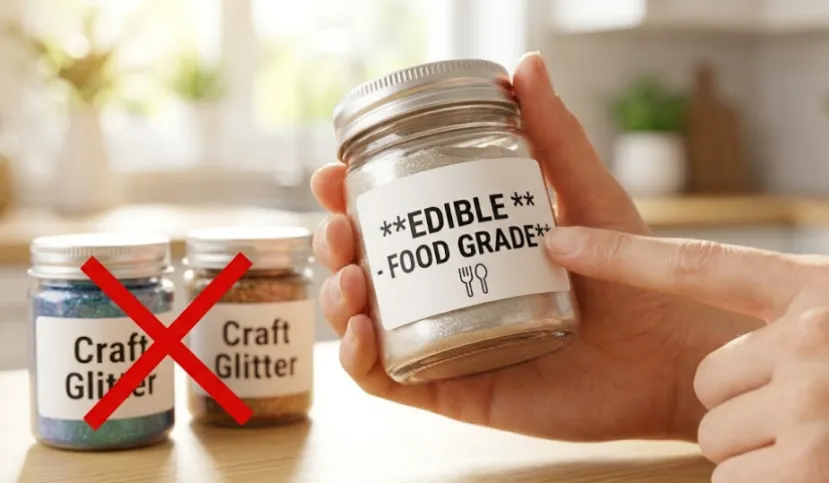
To answer how to know if glitter is edible, start with the front label and the product category. Look for terms such as edible, food grade, or food application. Then check whether the product is actually sold for drinks, cakes, candy, or other food uses. YAYANG separates its catalog into food, beauty, and DIY application lines, which is exactly the kind of structure a cautious buyer wants to see because it reduces category mix-ups. You can see that split in its food application range.
Check the Ingredient Trail
A good supplier does not stop at a shiny photo. You should see ingredients, use direction, and basic commercial detail. That is where YAYANG fits naturally into the conversation. YAYANG presents itself as an effect pigment manufacturer founded in 1999, with food-grade lines, an R&D team, and support for customization, MOQ discussion, and both large and small orders. For a buyer, that matters because reliable food glitter sourcing is rarely about one pretty SKU. It is about whether the supplier separates food-use materials from beauty and DIY lines, keeps product development organized, and speaks the language of actual manufacturing rather than vague sparkle marketing.
How to Tell If Edible Glitter Is Safe for Drinks?
If you are still asking how to tell if edible glitter is safe, use a short checklist and be a bit stubborn about it. You do not need a lab. You need clean product information, a sensible use case, and the discipline to walk away when a label looks slippery.
Use a Simple Buyer Checklist
Check whether the package says edible. Check whether it has an ingredient list. Check whether it is sold for food or drink use. Check whether the supplier page gives application context, not just glam shots. Check whether the instructions tell you how much to use. If any of those pieces are missing, pause. This is the easiest way to answer what does food-grade glitter mean in real buying terms. You are not buying sparkle alone. You are buying traceable food use. A useful related read is edible glitter vs. non-toxic glitter.
Match the Glitter to the Drink
Yes, can you put edible glitter in drinks and can you drink glitter in alcohol are valid questions. The answer is yes when the glitter is made for that use and you follow the product directions. In practice, a small amount usually does the job. Clear cocktails, sparkling water, and mocktails tend to show the shimmer best. Heavier drinks may need more stirring. That is not a safety issue, just a practical one, and honestly it saves you from dumping in too much.
Why Do Buyers Keep Getting Confused?
Because the market blurs decorative language with food language. A lot of products are sold on visuals first. Buyers see “safe,” “non-toxic,” or “premium shimmer” and assume those phrases answer the food question. They do not.
The Non-Toxic Trap
If you are still wondering is non-toxic glitter safe for drinks, the safe answer is no, not by label alone. You need edible labeling and food-use context. Without that, the product should stay out of the glass.
The Decoration-Only Trap
The other trap is “for decoration only.” When you see that line, believe it. It means the seller is not presenting the product as something to eat or drink. For buyers, this is the point where the decision should be easy. Put it back and move on.
FAQ
Q1: Is edible glitter safe for drinks?
A: Yes, true edible glitter safe for drinks can be used in beverages when it is clearly labeled edible, sold for food or drink use, and backed by ingredient information.
Q2: Can you drink edible glitter?
A: Yes, but only if it is food grade edible glitter, not a decorative or non-toxic craft product.
Q3: Is non-toxic glitter safe for drinks?
A: No. “Non-toxic” does not mean made to be swallowed. For drinks, you need edible labeling and food-use positioning.
Q4: How to know if glitter is edible?
A: Check for the word edible, an ingredient list, food or beverage application, and clear supplier information. If it says “for decoration only,” do not drink it.
Q5: Can you put edible glitter in drinks and cocktails?
A: Yes. Certain pearlescent pigments are permitted in some cocktails and mixers, and food-use drink glitter can work well in both alcoholic and non-alcoholic beverages when used as directed.