A customer ordering two dozen birthday cookies rarely wants flour and icing alone. They want a child’s name, the party colors, and a box that feels made for that Saturday. Those details create room for a higher order value, yet hand-piping every letter can swallow the extra revenue in labor.
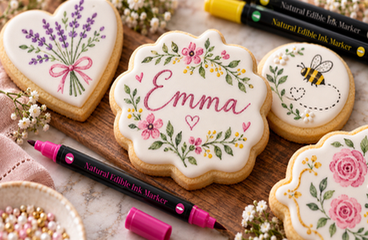
That tension shapes a custom cookie decoration business. The practical goal is to sell personalization through a repeatable process. A YAYANG Natural Edible Ink Marker can add names, short messages, and small drawings to dry icing with a fine tip, while a broad tip fills compact color areas. The wider food decoration range can help you plan the materials for personalized orders. When you price the product, labor, packaging, and experience together, customization can support your bakery profit margin.
Why Does Personalization Raise Per-Order Value?
Personalization ties the baked item to a person or event. A cookie marked with a wedding date, child’s nickname, or event message belongs to one order, which raises its value to that buyer.
Sell a Specific Occasion
Build offers around wedding favors, birthday place settings, baby-shower boxes, and school holiday kits. Set a base design, then let the buyer choose a name, date, two colors, and one small motif. Those limits keep production predictable.
Package the Moment
A hand-drawn gift box can carry a theme across the cookies, card, and sleeve. Add a blank cookie and marker for the recipient. The activity gives the bakery a visible upgrade to price.
How Should You Price Customized Bakery Items?
Start with a cost floor. Use this formula for each order: ingredients + direct labor + packaging + allocated overhead = true cost. Then add the return your business needs for the design tier, order risk, and occasion value.
Cost the Minutes You Usually Miss
Track customer messages, sketch approval, test cookies, name changes, drying, packing, and cleanup. Ten minutes of pre-order discussion across six small jobs becomes one paid hour. Your quote needs to carry that time.
For a planning example, a 24-cookie order might carry $29 in ingredients, marker use, and packaging, plus two labor hours at $25 per hour. A 25% overhead allowance on that $79 subtotal brings true cost to $98.75. A selling price of $132 leaves $33.25 before tax and other business-level costs, or about 25.2% of sales. Replace every sample figure with your records.
Use Design Tiers
Keep the base tier to one color and one repeated message. A signature tier adds names. A gift tier adds mixed drawings, a presentation box, and one approved sketch. Each tier gives buyers a clear reason for the price step.
Which Offers Fit a Custom Cookie Decoration Business?
Use a few formats that share the same baked base. Batch the dough and icing, then change the final artwork by order. That rhythm lowers active decoration time per cookie.
Personalized Signature Cookies
Use a fine tip for names, dates, and outlines on dry royal icing or firm fondant. Create two lettering styles and a short motif menu. A 12-character message cap keeps timing predictable.
Hand-Drawn Gift Boxes
Offer six or twelve cookies around one theme. Repeat two anchor designs and personalize the rest. Wedding tables, client gifts, and milestone birthdays suit this format.
Edible Marker DIY Kits
Edible marker DIY kits can include cookies, dry icing, food-use markers, a color card, and theme prompts. For children’s kits, request ingredient and allergen information, food-use instructions, and documents relevant to your market. Add an adult-supervision note where local rules call for one.
How Can You Cut Decoration Labor and Keep the Personal Detail?
Labor falls when the baker completes the foundation in batches and the marker handles the final detail. Your team follows the same production order across the tray.
Separate Base Work From Final Art
Bake one shape, flood the icing, and let it dry. Add outlines and lettering with the fine tip, then fill small areas with the broad tip. On each new recipe, make three strokes on a spare piece and check line width, color density, and drying time.
Set a Batch Routine
Group pieces by design, then color. Finish all names before filled details. Close each cap promptly and separate cookies until the ink dries. The main product site provides a route for current pack and product questions.
Measure revenue per active production hour alongside order value. A $140 order that takes five active hours contributes less per hour than a $110 batch finished in two. That number shows whether personalization is helping your bakery profit margin.
What Should Go into a Commercial Starter Kit?
A Commercial Starter Kit should support a paid trial on your recipes. Staff can test line work, color fill, drying, packing, and customer use.
Choose Tools Around the Menu
Include dual-tip food-use markers, core colors, test cookies, storage labels, and a batch worksheet. Fine and broad tips cover names, outlines, and compact fills. Test dry royal icing, firm fondant, macaron shells, dry chocolate plaques, and wafer paper when they appear on your menu.
Set Purchasing Checks
Ask for colors, ingredient and allergen details, shelf life, storage guidance, cap seal, pack count, labeling, samples, carton details, and MOQ. Record the target market and intended surface so you can compare the sample with the product you plan to sell.
How Can the Right Supply Plan Support Profitable Personalization?
Once the offer sells, supply consistency protects the quoted labor time. Your marker format, color set, pack size, and reorder point should match the designs that staff repeat each week.
Match the Tool to Paid Work
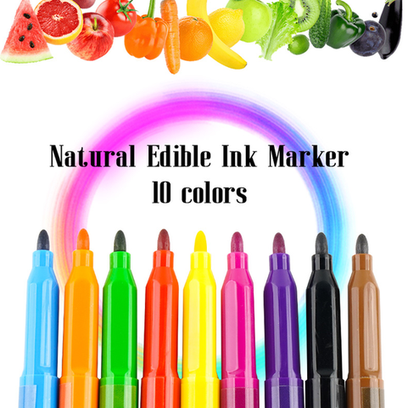
YAYANG pairs a fine tip for lettering and outlines with a broad tip for compact fill areas in the YAYANG Natural Edible Ink Marker. That format suits signature cookies, DIY coloring packs, wedding favors, and mixed-surface gift boxes. Food-grade edible ink is intended for direct application to food; commercial buyers should confirm the current ingredient, allergen, compliance, and usage documents for their market.
Start with samples on your own icing and packaging process. Then use the food product range to discuss colors, pack format, labeling, target volume, and MOQ for a Commercial Starter Kit. A trial built around real orders gives you usable timing and cost data before a bulk purchase.
FAQ
Q1: How Can a Custom Cookie Decoration Business Raise Per-Order Value?
A: Offer controlled choices such as names, dates, two colors, and one motif. Add a priced gift-box or activity-kit tier, then track the labor minutes attached to each choice.
Q2: What Belongs in Edible Marker DIY Kits?
A: Include cookies with dry decorating surfaces, food-use markers, a color card, theme prompts, storage details, ingredient and allergen information, and clear use instructions.
Q3: How Should You Price Hand-Drawn Cookies?
A: Add ingredients, direct labor, packaging, and allocated overhead to find true cost. Apply a design tier for individual names, mixed artwork, approval time, and order risk.
Q4: What Should You Test Before Buying a YAYANG Natural Edible Ink Marker in Bulk?
A: Test line width, color density, drying time, cap seal, and handling on your actual icing or fondant. Review ingredients, allergens, shelf life, storage, labeling, samples, and MOQ.
Q5: Which Number Best Shows Whether Customization Helps Bakery Profit Margin?
A: Track contribution per active production hour beside average order value. Use selling price minus variable order costs, then divide by active labor hours. Compare the result by design tier each month.