
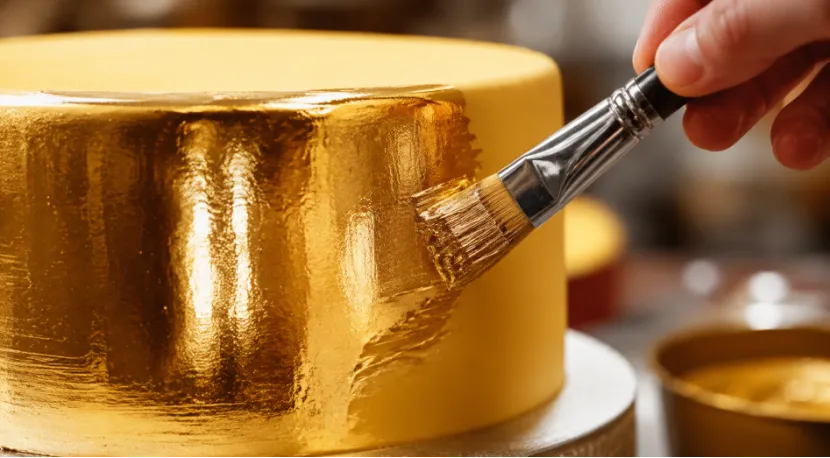
Metallic luster dust might look bright in the jar. Yet, it can turn flat, yellow, gray, or streaky on a cake. If you wonder why does my luster dust look dull, the powder isn’t always to blame.
A real metallic finish relies on multiple factors. These include pigment strength, base color, and surface feel. Your mixing liquid, brush strokes, drying time, and lighting matter too.
Gold luster dust can look like mustard yellow on white fondant. Silver luster dust might resemble plain gray paint if applied too thin. Even great products cannot hide every bump or wet spot.
Here are nine practical ways to fix dull luster dust before the finished cake reaches the display table.
1. Are You Using a True Metallic Product?
The words pearl, shimmer, iridescent, sparkle, and metallic do not describe the same finish. Pearl dust usually creates a soft glow. Sparkle products show separate points of light. A true metallic product should create a more continuous reflective layer.
Check whether the product is sold as metallic luster dust or simply as a pearl color. Also confirm that it is edible or food grade before applying it to any surface that will be eaten. A bright craft pigment may photograph well in its container, but it does not belong on a cake.
2. What Is the Best Base Color for Metallic Luster Dust?
The base color for metallic luster dust changes both coverage and depth. White is clean, but it can make one thin coat look pale and patchy.
The best base color for gold luster dust is usually yellow, caramel, warm beige, or light brown. Gold covers these shades faster than white. For silver, use medium gray, charcoal, or black when you want a deeper chrome effect. Rose gold luster dust works well over blush, peach, or warm nude. Copper luster dust gains depth over terracotta, burnt orange, or dark chocolate.
A matching base also hides tiny pinholes between brush strokes. That small detail can save an entire extra coat.
3. Is the Surface Smooth and Completely Dry?
A smooth surface for metallic luster dust matters because reflective finishes reveal texture. A small ridge that barely shows under matte icing may look obvious once light hits silver paint.
Let fondant dry before painting. Royal icing should be hard, not merely crusted at the top. Chocolate should be firm and free from condensation. On buttercream, work with a stable, chilled surface and use very little liquid.
Decorating guides commonly recommend clean surfaces, soft brushes, and gradual layers because rough or damp areas can produce streaks and uneven coverage.
4. What Is the Right Luster Dust Paint Ratio?
A poor luster dust paint ratio is one of the main reasons metallic color looks weak. When the mixture contains too much liquid, the reflective particles spread too far apart. The result becomes transparent rather than metallic.
Start with powder, then add liquid one drop at a time. Concentrated luster dust paint should flow from the brush without running down the cake. If the paint resembles colored water, add more dust. If the brush drags and leaves raised lines, add one more drop of liquid.
Mix only a small amount. Metallic paint dries in the palette faster than many decorators expect, especially during a long cookie order.
5. What Should You Mix With Metallic Luster Dust?
Picking your liquid for metallic luster dust changes how fast it dries and shines. You can make fast-drying edible paint using food-grade high-proof alcohol or vodka. Clear alcohol extracts and proper edible painting solutions work well, too.
Water is okay for firm fondant. However, it takes much longer to dry. It also leaves a duller finish. Keep water away from chocolate entirely. Never put rubbing alcohol, industrial ethanol, or cleaning liquids on food. High-proof clear alcohol evaporates rapidly. Therefore, it leaves a clean, solid pigment layer behind.
6. How Many Coats of Luster Dust Do You Need?
If you are wondering how many coats of luster dust are needed, two or three thin layers are a sensible working range. The exact number depends on the base, shade, and pigment strength.
Apply the first layer lightly. Let it dry completely, then inspect it from the side. Add another thin coat rather than one heavy layer. Thick paint dries unevenly, holds brush marks, and may lift when you touch it again.
Do not judge the shade while it is wet. Wet metallic paint can appear darker and shinier than the final surface.
7. How Can You Paint Luster Dust Without Streaks?
To learn how to paint luster dust without streaks, choose the brush for the size and shape of the area. The best brush for metallic luster dust is often a soft, flat synthetic brush for broad fondant panels. Use a smaller round brush on curves and fine details.
Keep each pass moving in one direction. Do not repeatedly brush a section that has started to dry. That is how streaky metallic luster dust often begins.
Load the brush evenly, wipe away excess paint, and keep the pressure light. A heavy hand creates darker edges where the bristles stop.
8. How Do You Polish Metallic Luster Dust?
Learning how to polish luster dust can move the finish from colored paint to convincing metal.
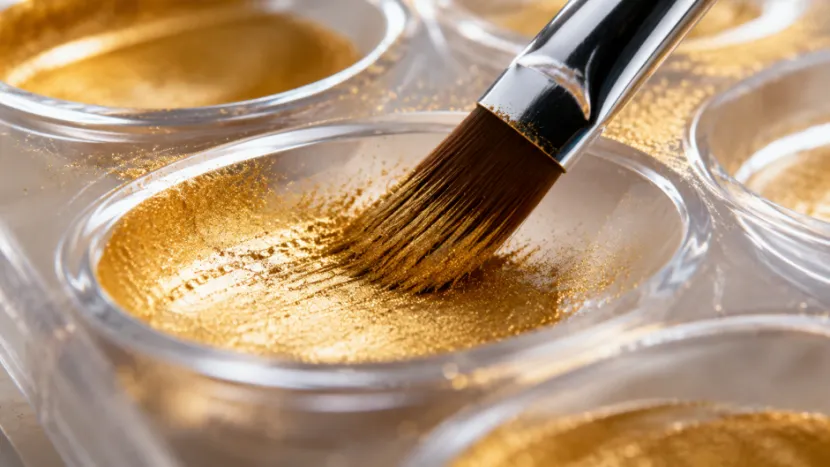
First, apply the wet paint and let it dry fully. Next, take a clean, soft brush and pick up a very small amount of dry powder in the same shade. Gently dry polish luster dust across the surface using light circular movements.
This paint and polish method fills minor transparent spots and raises the shine. Do not add a thick layer of loose powder. Too much can look grainy and may transfer onto the box, table, or someone’s black shirt. It happens.
9. How Does Lighting Affect Metallic Luster Dust?
Knowing how lighting affects metallic luster dust prevents you from fixing a finish that is not actually faulty. Metal needs highlights and shadows to look reflective.
Directional side light usually shows metallic shine better than flat overhead light. Warm light can strengthen gold and copper. Cool light may make silver cleaner, but it can also make rose gold appear pink.
Check the cake near a window, under your work lights, and through a phone camera. Gold luster dust looks dull in photos when the light is too even or the exposure is too bright. A slight change in angle may reveal the high-shine metallic finish immediately.
Why Do Gold and Silver Change Color?
The question why does gold luster dust look yellow often points to a white base, a pearl-style product, or paint that is too thin. Add pigment, use a warmer base, and finish with dry polishing.
The answer to why does silver luster dust look gray is similar. Silver needs a smooth surface, enough pigment, and directional light. On plain white fondant, one thin layer can read as pearl gray rather than metal.
How Does YAYANG Support Metallic Food Decoration?
For decorators and commercial buyers, repeatable shade and particle quality matter as much as technique. YAYANG has produced effect pigments since 1999 and supplies food, beauty, DIY, and industrial applications. Its site also describes product development, quality management, packaging, and custom service capabilities.
YAYANG’s E171-free metallic luster dust range includes gold, silver, rose gold, copper, pearl, and vivid shades. The product is presented as food grade, titanium dioxide free, vegan friendly, free from common allergens, and without taste impact. It can be dry brushed or mixed into paint for cakes, cookies, cupcakes, chocolate, and beverages, making YAYANG a practical edible metallic luster dust supplier for both standard and custom projects.
FAQ
Q1: Why does my metallic luster dust look dull?
A: Common causes include a pale base, rough surface, thin paint, too much liquid, too few coats, or flat lighting.
Q2: How do you make luster dust look more metallic?
A: Use a matching base color, concentrated paint, several thin coats, and a final dry polish.
Q3: Why does gold luster dust look yellow?
A: The product may be pearl gold rather than metallic gold, or the layer may be too thin over a white base.
Q4: Why does silver luster dust look gray?
A: Silver can appear gray when coverage is weak, the surface is rough, or the lighting creates no clear highlights.
Q5: How many coats of luster dust do you need?
A: Two or three thin coats usually give better coverage than one heavy coat, though the base color and pigment strength affect the final number.